
How Long Is the Flight to Madrid? Flight Times, Duration and Travel Advice
Find average flight times to Madrid from the UK, the US and around the world, plus expert travel tips to help you plan your journey.
By Liam Mulligan | Published on May 26, 2025 | Last Updated on July 10, 2026
Travels Around Spain contains affiliate links. This means I may earn a commission if you make a purchase or booking through these links, at no extra cost to you. As an Amazon Associate I earn from qualifying purchases. I only recommend products and services I use and trust. Read my full Affiliate Disclosure for more information.
Wondering how long the flight to Madrid is? A direct flight takes around 2 hours 20 minutes from London, just over 7 hours from New York, and around 11 hours 30 minutes from Los Angeles. Your exact flight time will depend on where you’re travelling from, whether you choose a direct or connecting flight, and factors such as weather and air traffic.
As Spain’s capital and largest international gateway, Madrid is well connected to cities across Europe, North America, and beyond. Whether you’re planning a weekend city break or the start of a longer Spanish adventure, knowing how long your journey will take can help you choose the best flights and plan your arrival.
In this complete guide, you’ll find average flight times to Madrid from the UK, the US and other international destinations. I’ll also explain what affects flight duration, compare direct and connecting flights, and share practical tips to help make your journey as smooth as possible.

PLAN YOUR TRIP TO Madrid
Trusted resources for planning your Madrid trip.
Royal Palace of Madrid Tickets – Book tickets for one of Madrid’s most famous landmarks.
Madrid Tours & Experiences – Discover guided tours, Toledo day trips, and local experiences.
Toledo Day Trips – Explore Spain’s most fascinating medieval city, just 30 minutes from Madrid.
Hotels in Madrid – Find boutique hotels and stays across Madrid’s best neighbourhoods.
Flight Times to Madrid from the UK, the US and Beyond
Madrid is Spain’s busiest international airport and one of Europe’s best-connected capitals, with direct flights from cities across the UK, the US and many other destinations around the world. Whether you’re planning a weekend city break or a longer holiday in Spain, knowing your expected flight time can help you choose the best route and plan your arrival.
The tables below show the average flight times to Madrid from major departure cities. These are based on direct flights where available. Keep in mind that weather conditions, air traffic and airline routing can all affect your actual journey time.

Average Direct Flight Times from the UK
| Departure City | Average Flight Time | Notes |
| London | 2h 20m | Multiple daily direct flights |
| Manchester | 2h 40m | Direct flights available daily |
| Edinburgh | 3h 00m | Fewer direct flights per week |
| Birmingham | 2h 30m | Limited direct routes |
| Bristol | 2h 30m | Often seasonal or via London. |
Average Direct Flight Times from the US
| Departure City | Average Flight Time | Notes |
| New York (JFK) | 7h 15m | Nonstop daily |
| Boston | 7h 10m | Nonstop several times per week |
| Miami | 8h 15m | Direct routes, often overnight |
| Chicago | 8h 30m | Daily nonstop service |
| Los Angeles | 11h 30m | Nonstop or via a major hub |
| Dallas | 9h 45m | Often via American Airlines |
| Atlanta | 8h 45m | Seasonal direct flights available |
Average Flight Times from Other International Destinations
| Departure City | Average Flight Time | Notes |
| Toronto | 7h 40m | Mostly nonstop flights |
| Dubai | 7h 30m | Typically 1-stop flights. Direct flights available. |
| Sydney | 24 hours | Usually requires 2+ stopovers |
| Tokyo | 13h 30m | Often 1-stop flights |
| Beijing | 12h 30m | Often 1-stop flights |
| Buenos Aires | 13h 50m | Often 1-stop flights |
As you can see, Madrid is one of the easiest cities in Spain to reach by air. Flights from the UK usually take less than three hours, making Madrid an excellent destination for a short break. Travellers from the eastern United States can reach the Spanish capital in around seven to eight hours on a nonstop flight, while longer journeys from the west coast and other parts of the world often require one or more connections.
If you’re comparing flight options, remember that the quickest flight isn’t always the shortest overall journey. A direct flight with a slightly longer flying time can often get you to Madrid much sooner than a cheaper itinerary with a lengthy layover.

UK vs US Flight Times to Madrid
Thanks to the UK’s close proximity to Spain, flights to Madrid are relatively quick and convenient. Most direct flights take less than three hours, making Madrid an ideal destination for a weekend city break or a short holiday. Frequent daily departures from airports such as London, Manchester and Birmingham also give travellers plenty of flexibility when choosing flight times.
For travellers from the United States, the journey is naturally much longer. Nonstop flights from New York and Boston take around seven hours, while departures from cities such as Miami, Chicago and Dallas typically take between eight and ten hours. If you’re travelling from the West Coast, expect flight times of around 11½ hours or longer, although some routes may require a connection.
Although travellers from the US have a longer journey, Madrid remains one of Europe’s most accessible capitals thanks to its excellent range of direct transatlantic flights. If you’re travelling from the East Coast, choosing a nonstop service can have you in Spain overnight. Wherever you’re flying from, booking a direct flight whenever possible is usually the best way to reduce travel time, avoid unnecessary layovers and start your Spanish adventure with less stress.
Factors That Affect Flight Time to Madrid
Published flight times are only estimates. Although airlines work to keep to their schedules, several factors can affect how long your journey to Madrid actually takes. Understanding these can help you set realistic expectations and avoid unnecessary stress if your flight arrives a little earlier or later than planned.
Weather Conditions
Weather is one of the biggest factors affecting flight times. Strong tailwinds can shorten your journey, while headwinds, particularly on transatlantic flights, can add extra time in the air. Thunderstorms, heavy rain and snow may also force aircraft to take alternative routes or wait for permission to land.

Air Traffic and Flight Routing
Madrid-Barajas Airport is Spain’s busiest airport, handling hundreds of flights every day. During busy periods, aircraft may need to enter a holding pattern before landing or follow a longer route to avoid congestion. Air traffic control restrictions elsewhere in Europe can also affect your journey time.
Direct vs Connecting Flights
While the flying time itself may not change, choosing a connecting flight can significantly increase your overall journey. Long layovers, missed connections and delays at your transfer airport can add several hours to your trip. Whenever possible, a direct flight is usually the quickest and least stressful option.
Seasonal Disruptions
The time of year you travel can also make a difference. Summer is the busiest travel season, meaning airports and airspace are often more congested. In winter, adverse weather at your departure airport may cause delays or cancellations, particularly if you’re flying from northern Europe or North America.
Pro Tip – If you’re travelling on a tight schedule or planning to continue your journey elsewhere in Spain, allow extra time for unexpected delays and, where possible, choose a direct flight. It may cost a little more, but the time and stress you save can be well worth it.
Direct vs. Connecting Flights: Pros and Cons
When booking a flight to Madrid, one of the biggest decisions you’ll make is whether to fly direct or choose a connecting service. While the cheapest fare can be tempting, it’s worth considering how much your time and convenience are worth.
A direct flight is usually the quickest and least stressful option. With no stopovers or aircraft changes, you’ll spend less time travelling and reduce the risk of missed connections or delays. This can be especially valuable if you’re visiting Madrid for a short break or arriving before continuing your journey elsewhere in Spain.
Connecting flights, on the other hand, can often be significantly cheaper, particularly during peak travel periods. They may also offer more flexibility if you’re departing from an airport that doesn’t have direct services to Madrid. However, longer layovers and additional airport transfers can add several hours to your overall journey and increase the chance of travel disruptions.
If you’re flying from the UK, a direct flight from London to Madrid takes just over two hours. Adding a stopover could easily extend your journey by three or four hours. From the US, a nonstop flight from New York takes around seven hours, while connecting itineraries can increase total travel time to ten hours or more, depending on the length of your layover.

Pro Tip – If your budget allows, choose a direct flight whenever possible. Although it may cost a little more, you’ll spend less time travelling, reduce the chances of delays and have more time to enjoy your trip to Madrid.
Best Airlines for Nonstop Flights to Madrid
Choosing a direct flight is only part of the equation. The airline you fly with can also make a big difference to your journey, whether you value comfort, flexibility or finding the lowest fare.
Best Airlines from the UK
Travellers from the UK have plenty of direct flight options to Madrid, with services operating from several airports across the country.
British Airways offers multiple daily flights from London and is an excellent choice if you value flexibility, generous baggage options and a full-service experience.
Iberia, Spain’s national airline, also operates frequent nonstop flights and has an excellent reputation for punctuality. As a member of the Oneworld alliance alongside British Airways, it’s a popular option for travellers connecting from other international destinations.

If you’re travelling on a budget, easyJet, Ryanair and Vueling all offer affordable direct flights from cities including Manchester, Edinburgh and Bristol. While fares are often lower, remember to check baggage allowances and optional extras before booking.
Pro Tip – Low-cost airlines can offer fantastic value, but paying for cabin baggage, seat selection and priority boarding can quickly increase the total cost of your ticket.
Best Airlines from the US
Several airlines operate nonstop services between the United States and Madrid, particularly from major East Coast hubs.
American Airlines offers direct flights from cities including New York, Miami and Dallas, with a full-service experience and convenient onward connections.
Delta Air Lines operates nonstop flights from New York (JFK) and is well regarded for its onboard service and reliability.
United Airlines offers seasonal nonstop services from Newark, providing another option for travellers flying from the New York metropolitan area.
Iberia also operates several direct routes between Madrid and major US cities. Flying with Spain’s national airline can be a convenient choice if you’re continuing your journey elsewhere in Spain.
Whichever airline you choose, compare more than just the ticket price. Baggage allowances, flight schedules, loyalty programmes and overall journey time can all make one airline a better choice than another.
How Travel Season Affects Your Journey
Although the actual flight time to Madrid remains fairly consistent throughout the year, the season you travel can have a noticeable impact on your overall journey. Airport queues, flight availability and ticket prices all vary depending on demand, so choosing when to travel can make a real difference to your experience.

Summer (June to August)
Summer is Madrid’s busiest travel season, with visitors arriving from around the world. Airports are often busier, flights are fuller and delays are slightly more common due to increased air traffic. The advantage is that airlines usually operate their fullest schedules, giving you more direct flight options and greater flexibility.
Pro Tip – Book your flights well in advance if you’re travelling during summer, especially if you want a direct flight or are travelling during the school holidays.
Winter (November to February)
Winter generally offers quieter airports and lower airfares, although airlines may reduce the number of direct services on some routes. If you’re flying from northern Europe or North America, winter weather at your departure airport could also increase the risk of delays or cancellations.
Shoulder Season (March to May and September to October)
For many travellers, spring and autumn are the best times to fly to Madrid. Flights are often cheaper than in summer, airports are less crowded and the weather is usually pleasant both for travelling and sightseeing once you arrive. It’s an excellent balance of value, convenience and comfort.
Whichever time of year you choose to visit, checking your airline’s schedule and arriving at the airport with plenty of time to spare will help your journey get off to the best possible start.
Expert Tips for Booking Flights to Madrid
Finding the right flight isn’t just about choosing the cheapest fare. A little planning can save you money, reduce travel stress and help you make the most of your time in Spain. Here are my top tips for booking flights to Madrid.
Book Early for the Best Fares
Flight prices often increase as your departure date approaches, particularly during school holidays and the summer months. If your travel dates are fixed, aim to book two to three months in advance to give yourself the best chance of securing a good price.
Be Flexible with Your Travel Dates
If your schedule allows, compare prices across several days before booking. Midweek departures, particularly on Tuesdays and Wednesdays, are often cheaper than weekend flights. Flying early in the morning or later in the evening can also help reduce costs.
Choose a Direct Flight Whenever Possible
A direct flight may cost a little more, but it can save several hours of travel time and reduce the risk of delays or missed connections. If you’re travelling for a short break, the extra convenience is often worth the additional cost.
Compare Airlines Before You Book
Don’t focus solely on the headline fare. Compare baggage allowances, seat selection charges, cancellation policies and flight times to make sure you’re getting the best overall value for your trip.
Track Prices Before Booking
Flight comparison websites such as Google Flights, Skyscanner and Kayak make it easy to compare routes and monitor fares. Setting up price alerts can help you spot discounts and book when prices fall.
Check for Extra Fees
Low-cost airlines can offer excellent value, but additional charges for cabin bags, checked luggage and seat selection can quickly increase the total cost of your trip. Always compare the final price before making your booking.
If you’re looking for more ways to save money and find the best routes, take a look at my guide on how to book a flight to Madrid, where I share more detailed tips and booking strategies.
Time Zones and Jet Lag: Adjusting After Your Flight to Madrid
Once you’ve landed in Madrid, one of the biggest challenges for long-haul travellers is adjusting to the local time. While visitors from the UK will only experience a one-hour time difference, travellers arriving from North America may need a day or two to fully adapt.
| Home City | Time Zone | Time Difference from Madrid |
| London | GMT/BST | -1 hour |
| New York | EST/EDT | -6 hours |
| Chicago | CST/CDT | -7 hours |
| Los Angeles | PST/PDT | -9 hours |
Note: Madrid follows Central European Time (CET) and observes daylight saving time, so always check the time difference before you travel.
If you’re flying from the UK, you’ll probably just feel the usual tiredness that comes with travelling. However, if you’re arriving from the United States or Canada, jet lag can affect your sleep, energy levels and appetite during your first couple of days.
Fortunately, there are a few simple ways to reduce the effects of jet lag:
- Stay hydrated throughout your flight.
- Try to sleep according to Madrid time if you’re travelling on an overnight flight.
- Spend time outdoors in daylight after you arrive, as natural light helps your body clock adjust more quickly.
- Avoid heavy meals and too much alcohol during your journey, as both can make jet lag feel worse.
If possible, avoid planning a packed sightseeing itinerary for your first afternoon in Madrid. Giving yourself time to settle in will help you enjoy the rest of your trip far more.
What to Expect When You Arrive at Madrid-Barajas Airport (MAD)
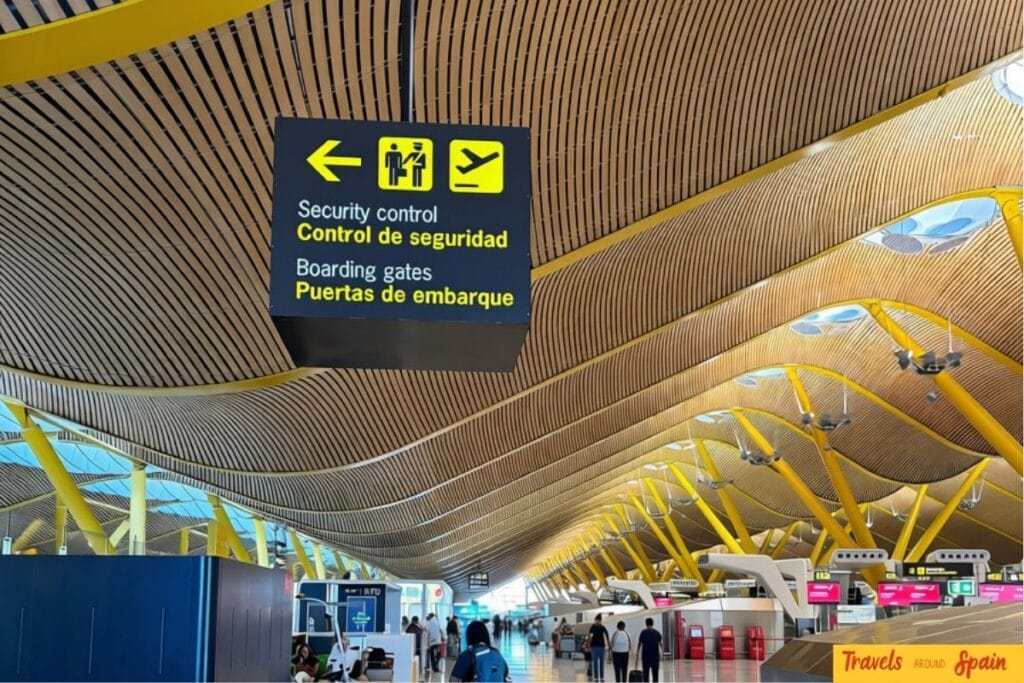
After landing, you’ll arrive at Adolfo Suárez Madrid-Barajas Airport (MAD), Spain’s busiest airport and one of Europe’s largest international hubs. Despite its size, it’s well signposted in both Spanish and English, making it straightforward to navigate, even if it’s your first visit to Madrid.
Passport Control and Customs
If you’re arriving from outside the Schengen Area, you’ll need to pass through passport control before collecting your luggage. Having your passport and any required travel documents ready will help speed up the process. Once you’ve cleared immigration, follow the signs to baggage reclaim and customs.
Collecting Your Luggage
Check the arrival screens for your baggage carousel and keep an eye out for any updates. If you’ve checked a suitcase, a brightly coloured luggage tag or strap can make it much easier to spot. Travelling with hand luggage only is another great way to save time, especially if you’re only visiting Madrid for a few days.
Getting to Madrid City Centre
Madrid-Barajas Airport has excellent transport links into the city centre, making it easy to start your trip.
- Metro Line 8 reaches central Madrid in around 20 to 30 minutes with a change onto the wider metro network.
- The Airport Express Bus operates 24 hours a day and is a convenient option if you’re staying near Atocha or Cibeles.
- Licensed taxis charge a fixed fare between the airport and central Madrid.
- Uber and other rideshare services are also available.
For a detailed comparison of transport options, including costs, journey times and my recommendations, see my guide to getting around Madrid.
Airport Facilities
Madrid-Barajas has four passenger terminals, with Terminal 4 handling many international and long-haul flights. Free shuttle buses connect the terminals, making transfers straightforward.
You’ll also find cafés, restaurants, shops, ATMs, currency exchange services and free Wi-Fi throughout the airport, making it easy to relax or organise the next stage of your journey before heading into the city.

Frequently Asked Questions
How long is the flight from London to Madrid?
A direct flight from London to Madrid takes around 2 hours and 20 minutes, although the exact flight time can vary depending on the airline, weather conditions and air traffic.
Are there direct flights from the US to Madrid?
Yes. Several airlines operate nonstop flights to Madrid from major US cities, including New York, Boston, Miami, Chicago, Dallas and Los Angeles.
Which airlines offer nonstop flights to Madrid?
Major airlines offering direct flights to Madrid include British Airways, Iberia, American Airlines, Delta Air Lines, United Airlines, easyJet, Ryanair and Vueling, depending on your departure airport.
What’s the fastest flight to Madrid from the United States?
Direct flights from Boston and New York are among the quickest, taking just over seven hours.
Is Madrid in the same time zone as London?
No. Madrid is usually one hour ahead of London, although both countries observe daylight saving time, so the time difference remains the same for most of the year.
What’s the best time of year to fly to Madrid?
Spring and autumn are often the best times to visit, with pleasant weather, fewer crowds and competitive airfares. Summer offers the widest choice of flights but is also the busiest and most expensive time to travel.
Final Thoughts: Making the Most of Your Trip to Madrid
Whether you’re flying from London in just over two hours or crossing the Atlantic from New York in around seven, Madrid is one of Europe’s most accessible capital cities. With excellent flight connections from the UK, the US and destinations around the world, getting to Spain’s vibrant capital is easier than many travellers expect.
Choosing a direct flight whenever possible, booking early and allowing a little flexibility with your travel dates can all help make your journey smoother. Once you’ve landed, you’ll be perfectly placed to discover everything Madrid has to offer, from world-class museums and beautiful parks to lively plazas, outstanding food and unforgettable day trips.
If you’re planning your itinerary, don’t miss my guide to 2 days In Madrid, packed with practical tips and recommendations to help you make the most of your visit from the moment you arrive.