Things To Do In Zaragoza: Complete Guide To Spain’s Most Underrated City
Discover grand basilicas, incredible tapas, and authentic Spain without overwhelming tourists
By Liam Mulligan | Published on August 4, 2026 | Modified on August 4, 2026
Travels Around Spain contains affiliate links. This means I may earn a commission if you make a purchase or booking through these links, at no extra cost to you. As an Amazon Associate I earn from qualifying purchases. I only recommend products and services I use and trust. Read my full Affiliate Disclosure for more information.
From enormous basilicas and Moorish palaces to fantastic tapas bars and Roman ruins, Zaragoza has far more to offer than most visitors expect. Sitting between Madrid and Barcelona on Spain’s high-speed rail line, Spain’s fifth-largest city is often overlooked in favour of places like Madrid, Seville, or Valencia.
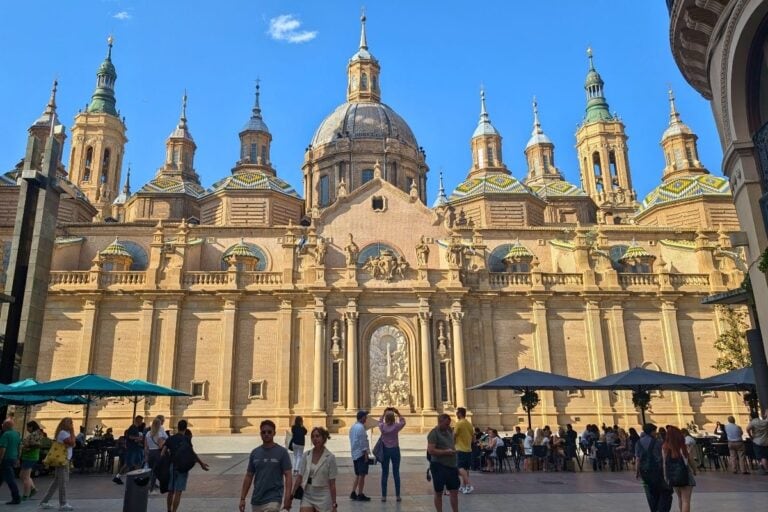
I visited Zaragoza during a northern Spain trip in 2024 after travelling through Bilbao, Logroño, and Pamplona, and it ended up being one of the biggest surprises of my trip. What stood out most was the balance Zaragoza offers. It has grand landmarks like the Basilica del Pilar, one of the most impressive churches I have visited in Spain, but without the overwhelming tourist crowds of Barcelona or Madrid.
Add in fantastic food, relaxed riverside walks, Moorish architecture, and a genuinely local atmosphere, and Zaragoza quickly becomes one of Spain’s most underrated city breaks. Whether you are visiting for a day or staying longer, these are the best things to do in Zaragoza.
Quick Overview: Things To Do In Zaragoza
Best for: History, architecture, food and less-touristy Spanish city breaks
Top attraction: Basilica del Pilar
Don’t miss: Basilica tower views and Puente de Piedra
Best historic attraction: Aljafería Palace
Best area for tapas: El Tubo
Local dish to try: Ternasco de Aragón
How long to spend: 2 days is ideal for most first-time visitors
Getting around: The historic centre is very walkable
Best time to visit: Spring and autumn for comfortable sightseeing
My experience: I spent three nights in Zaragoza in June 2024
Best for first-time visitors: Basilica del Pilar, Aljafería Palace, El Tubo and the Ebro riverfront
PLAN YOUR TRIP TO Zaragoza
Trusted resources for planning your Zaragoza trip.
Hotels in Zaragoza – Find hotels near Plaza del Pilar and Zaragoza’s historic centre.
Aljafería Palace Tours & Tickets – Browse tours and tickets for Zaragoza’s stunning Moorish palace.
Visit The Basilica del Pilar
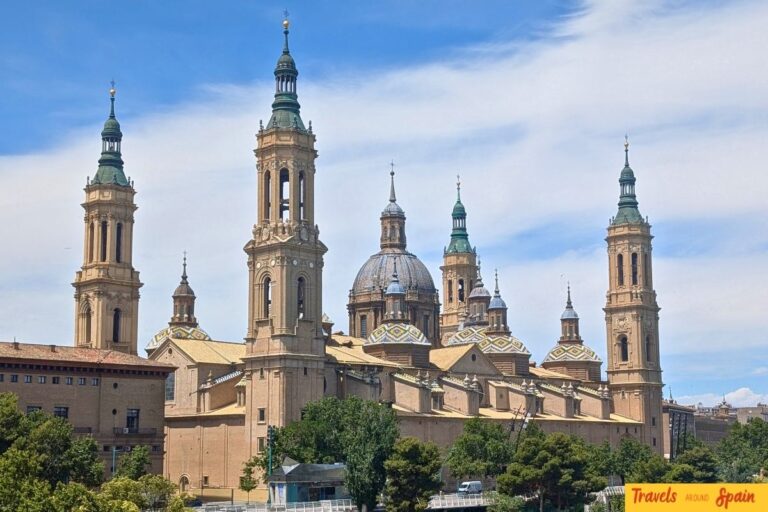
No trip to Zaragoza is complete without visiting the Basilica del Pilar. Sitting beside the River Ebro, this enormous baroque church is the city’s most iconic landmark and one of the most impressive buildings in Spain.
Why The Basilica Is Zaragoza’s Must-See Attraction
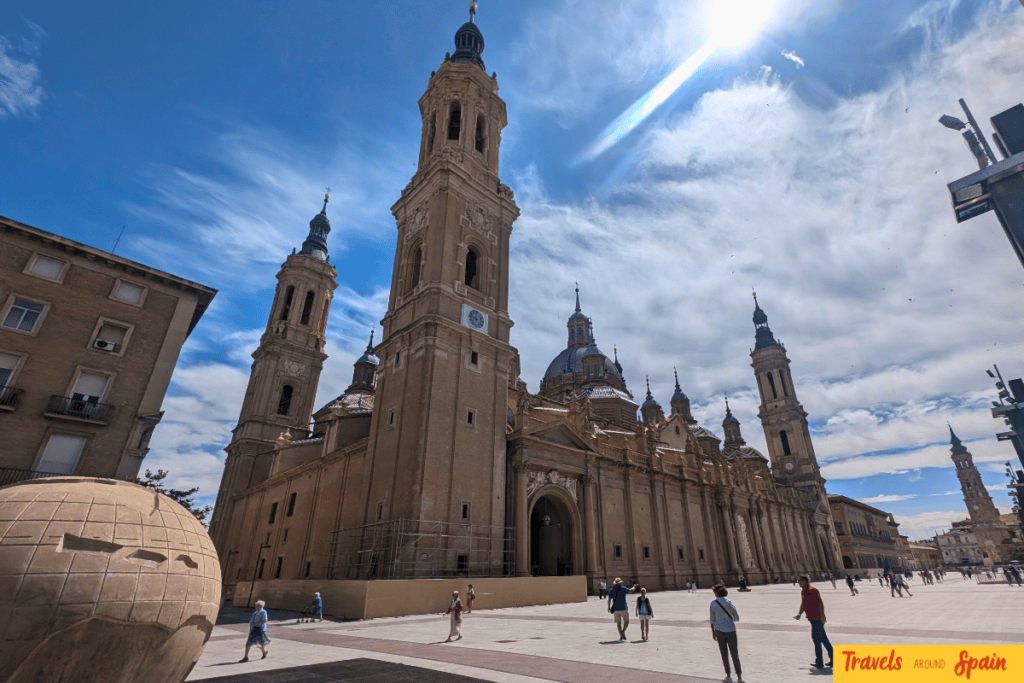
Honestly, nothing really prepares you for the scale of the basilica. I had seen photos before visiting, but standing in Plaza del Pilar for the first time genuinely caught me off guard. Having visited famous churches all over Spain, including the Sagrada Familia in Barcelona, the Basilica del Pilar still ranks amongst the grandest I have seen.
The basilica is one of Spain’s most important pilgrimage sites and dates largely from the 17th and 18th centuries. Even if you are not religious, the building itself is spectacular with huge domes, ornate towers, and an incredible riverside setting.
Go Up The Basilica Tower For The Best Views
One of the highlights of visiting the basilica is taking the lift up the tower viewpoint. From the top, you get fantastic panoramic views across Zaragoza’s old town, the River Ebro, and the surrounding city skyline.
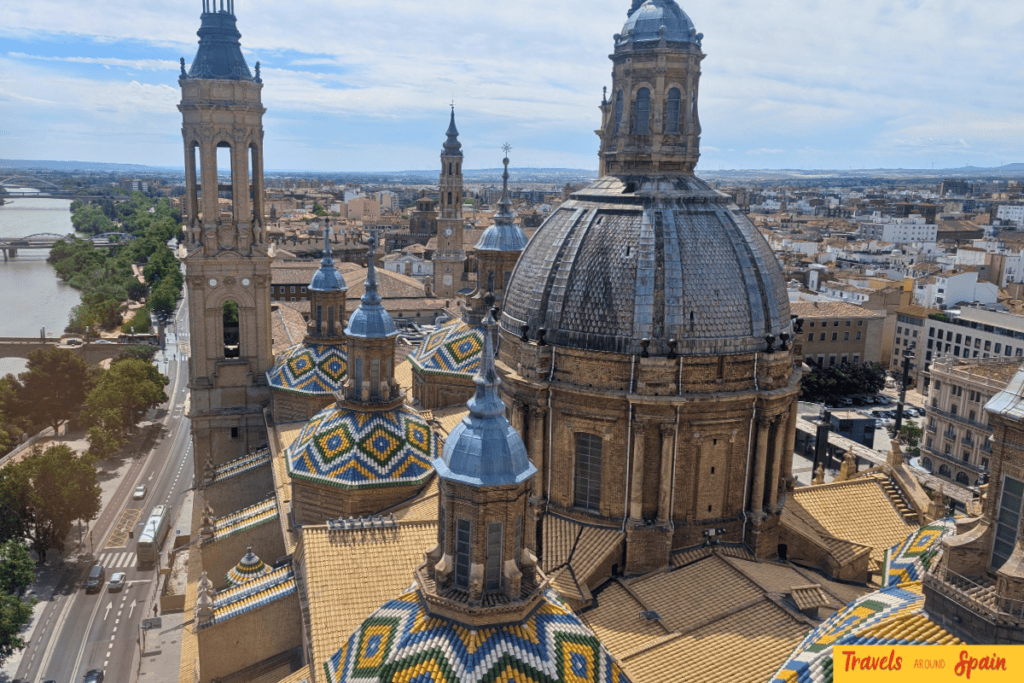
It also gives you a much better sense of Zaragoza’s scale. From above, you can really see how large the city is despite feeling far less hectic than places like Madrid or Barcelona.
What To Expect Inside
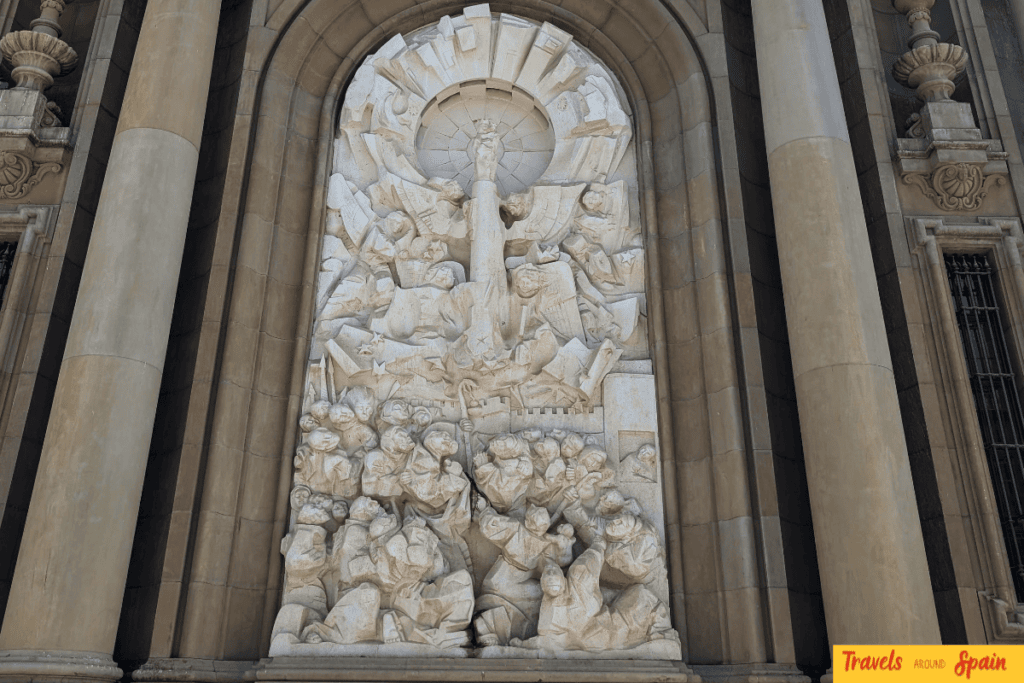
The interior of the basilica is just as impressive as the exterior. Inside, you will find soaring ceilings, ornate chapels, detailed religious artwork, and frescoes painted by Francisco de Goya, Aragón’s most famous artist.
The sheer size of the interior was what surprised me most. It feels enormous once you step inside and easily ranks amongst the most impressive churches I have visited anywhere in Spain.
Walk Across Puente de Piedra For Zaragoza’s Most Iconic View
One of the best free things to do in Zaragoza is walking across Puente de Piedra, the historic stone bridge that stretches over the River Ebro beside the Basilica del Pilar. If you want the classic Zaragoza photo, this is the place to get it.
From the middle of the bridge, you get an incredible panoramic view of the basilica’s enormous domes and towers rising above the riverfront. Honestly, this was probably my favourite viewpoint in the entire city because it really shows the sheer scale of the Basilica del Pilar. Seeing it reflected in the river, especially around sunset, makes Zaragoza feel far grander than many people expect.
The bridge itself dates back to medieval times and has long connected both sides of the city. Today, it is one of the most atmospheric places to wander in Zaragoza, particularly during the evening when locals gather along the riverbanks for walks and drinks.
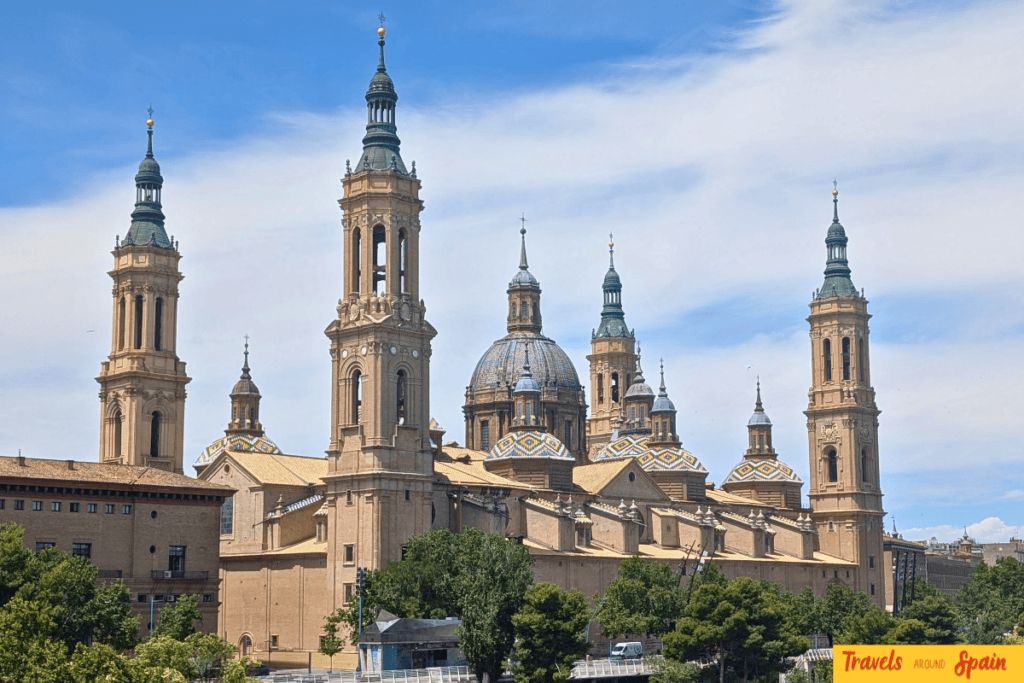
I would definitely recommend crossing the bridge more than once during your visit because the atmosphere changes throughout the day. Early mornings feel calm and peaceful, whilst evenings are much livelier with people enjoying the cooler temperatures after the heat of the day.
The pathways along the River Ebro are also worth exploring. Despite Zaragoza being one of Spain’s largest cities, the riverside area feels surprisingly relaxed and gives the city a much calmer atmosphere than places like Madrid or Barcelona.
Explore The Aljafería Palace
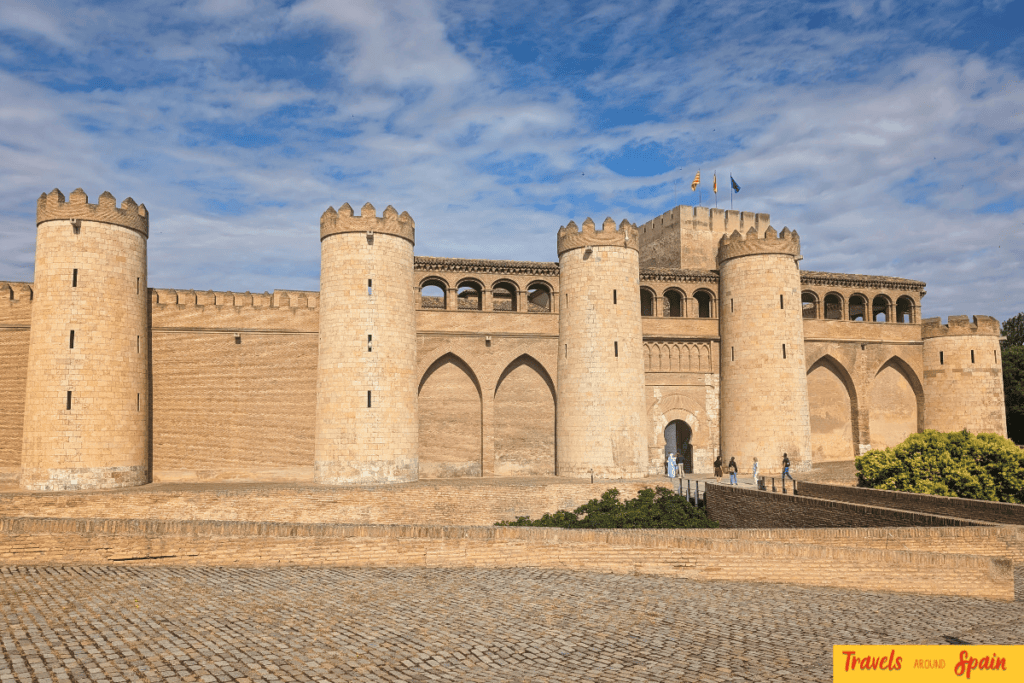
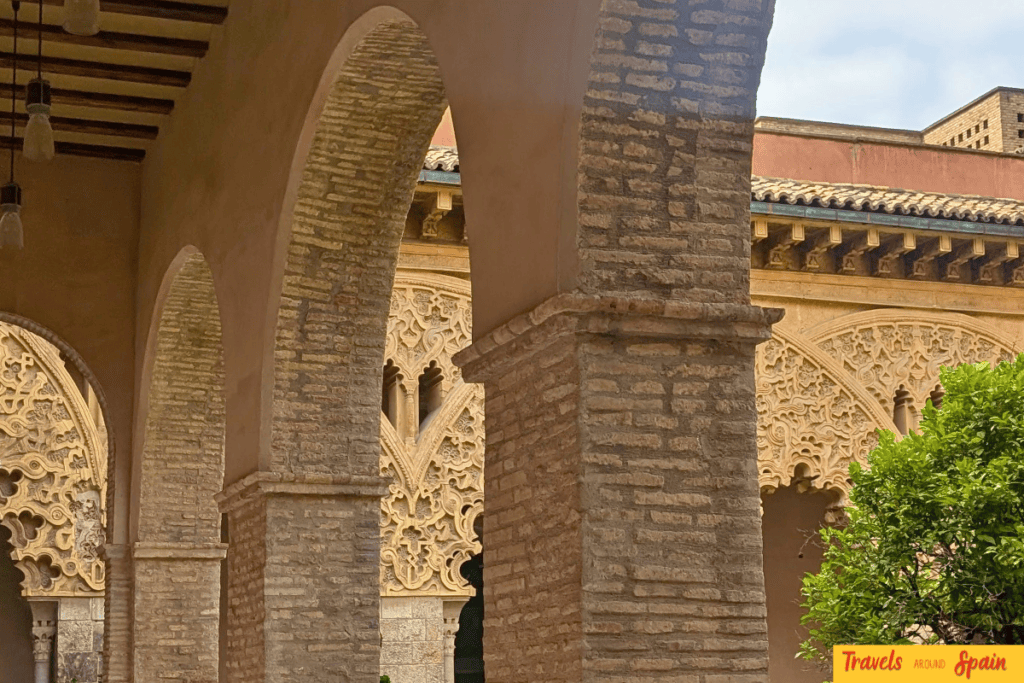
Whilst the Basilica del Pilar usually gets most of the attention, the Aljafería Palace was actually one of the attractions that surprised me most in Zaragoza. Hidden behind fortress-like walls just outside the old town, this stunning Moorish palace is one of the most important Islamic buildings in northern Spain.
Why It’s One Of Spain’s Most Underrated Moorish Palaces
Built during the 11th century when Zaragoza was part of Al-Andalus, the Aljafería Palace showcases the incredible mix of Islamic, Mudéjar, Gothic, and Renaissance influences that have shaped Spain over the centuries.
What makes it especially interesting is how overlooked it feels compared to famous Moorish sites in Andalusia like the Alhambra in Granada or the Alcázar in Seville. Whilst those landmarks attract enormous crowds, the Aljafería feels much calmer and easier to explore at your own pace.
I honestly was not expecting it to be as impressive as it was. From the outside, it looks fairly defensive and simple, but once you enter the palace courtyards and rooms, the detail becomes incredible. The intricate arches, Islamic decoration, and peaceful courtyards make it one of the most beautiful buildings in Zaragoza.
Highlights Inside The Palace
One of the highlights is the central courtyard with its horseshoe arches and intricate carvings, which immediately gives the palace a very Andalusian feel despite being located much further north. The Throne Room is also particularly impressive with its richly decorated ceilings and royal symbolism.
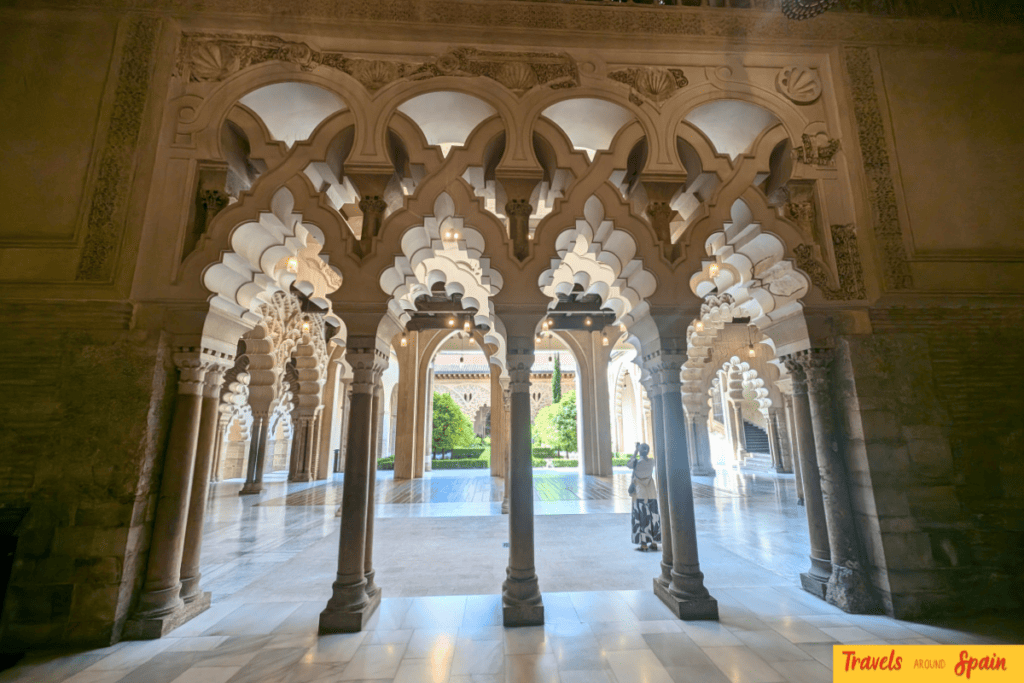
Today, part of the palace is also home to the regional parliament of Aragón, adding another interesting layer to the building’s long history.
If you are interested in Spanish history, Islamic architecture, or simply seeing a different side of Spain beyond the usual tourist trail, the Aljafería Palace is absolutely worth adding to your Zaragoza itinerary.
Eat Ternasco de Aragón
One of the most surprising parts of visiting Zaragoza was just how good the food was. Whilst cities like San Sebastián, Valencia, and Seville usually dominate conversations about Spanish cuisine, Zaragoza seriously impressed me with both the quality and affordability of its food scene.
What Is Ternasco?
Ternasco de Aragón is the region’s most famous dish and something you absolutely have to try whilst visiting Zaragoza. It is a protected Aragonese lamb dish made using young lamb raised across the Aragón region. Traditionally, it is roasted slowly until incredibly tender and is usually served with potatoes or vegetables.

Before visiting Zaragoza, I honestly had no idea ternasco was such an important regional speciality, but it quickly became one of my favourite meals from the entire trip. The flavour was rich without being too heavy and felt like proper hearty northern Spanish comfort food.
Why Zaragoza Surprised Me Food-Wise
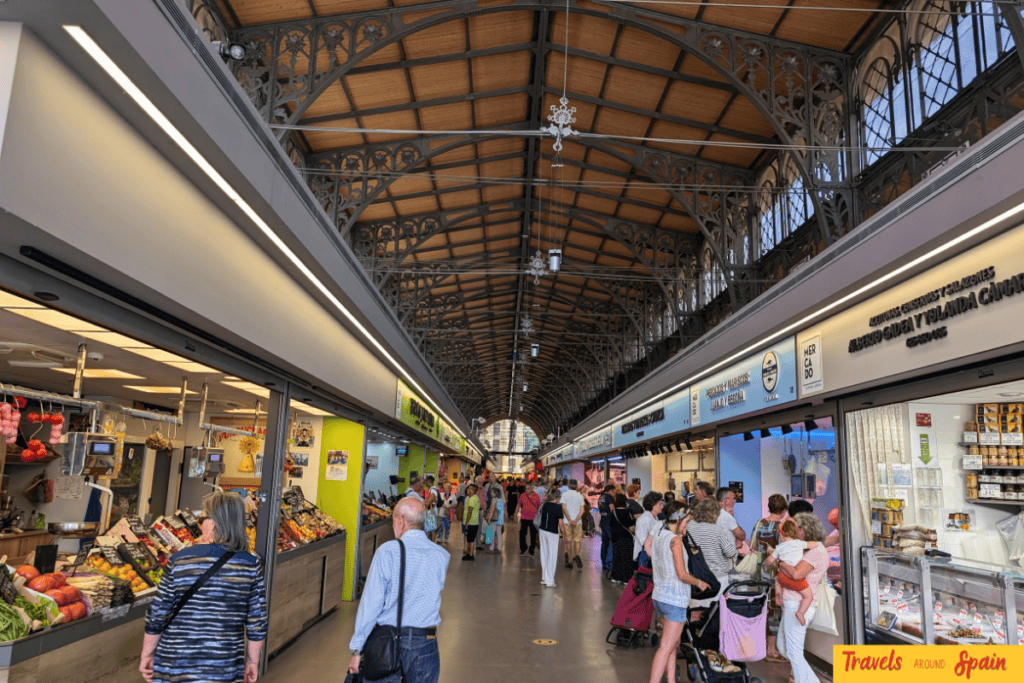
One thing I really loved about Zaragoza was how local the food scene felt. Unlike some of Spain’s bigger tourist cities, restaurants here still seemed heavily geared towards locals rather than visitors. Menú del día prices were very reasonable and the overall atmosphere felt much more authentic.
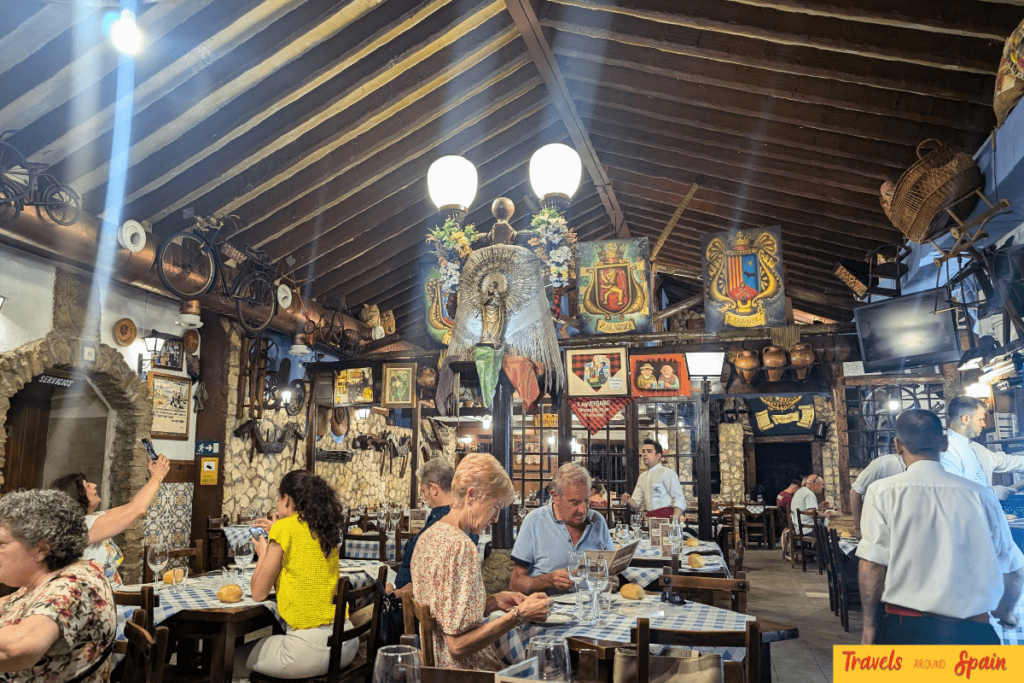
One of my favourite meals was eating ternasco at Restaurante El Fuelle, a traditional stone-walled restaurant in the old town. It was simple, cosy, and far less expensive than you would expect for a major Spanish city. Experiences like that were part of what made Zaragoza stand out so much to me.
Best Areas For Tapas And Local Restaurants
For tapas and local restaurants, El Tubo is the main area to visit. Located in Zaragoza’s old town, this maze of narrow streets is packed with tapas bars, small restaurants, and lively local spots.
The atmosphere here during the evening is brilliant with people moving between bars, sharing plates, and enjoying drinks outside. Even if you are only spending one day in Zaragoza, I would definitely recommend setting aside an evening for tapas hopping around El Tubo.
Wander Zaragoza’s Old Town
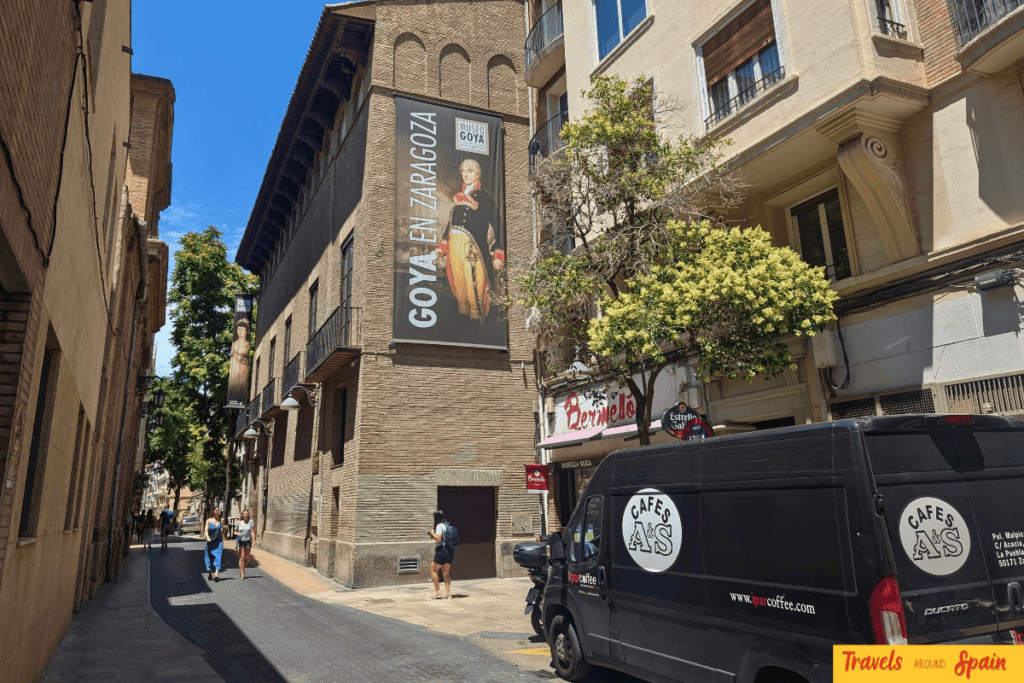
Zaragoza’s old town is one of the best places in the city to simply wander without a plan. Packed with historic streets, lively squares, churches, tapas bars, and Roman ruins, it feels much more relaxed and local than the historic centres of Madrid or Barcelona.
What I liked most was how authentic it still felt. Despite Zaragoza being one of Spain’s biggest cities, the old town never felt overwhelmingly touristy. Instead, it had a much calmer atmosphere with locals filling the cafés and plazas throughout the day.
Plaza del Pilar
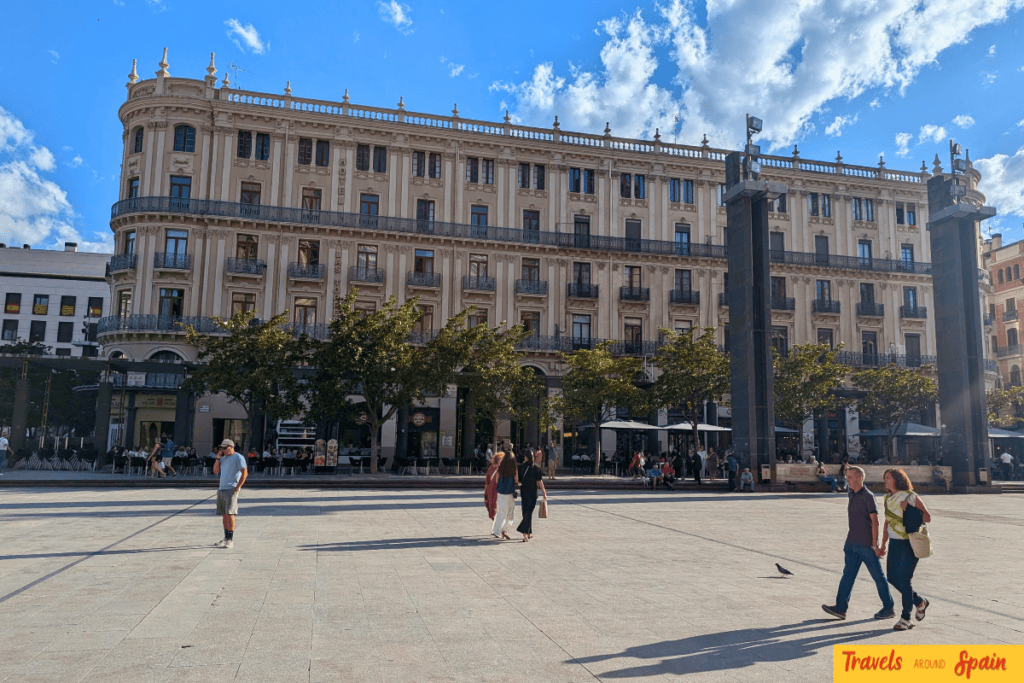
At the heart of the old town is Plaza del Pilar, one of the largest and most impressive public squares in Spain. Surrounded by the Basilica del Pilar, La Seo Cathedral, and several historic buildings, it acts as the main focal point of Zaragoza.
The square feels enormous when you first arrive and always seemed busy without feeling overcrowded. Street performers, cafés, and locals gathering around the plaza give it a really lively atmosphere throughout the day.
This is also one of the best areas in Zaragoza for photography, especially during sunset when the warm light hits the basilica’s towers and domes.
Roman Walls And Historic Streets
Zaragoza’s history stretches back to Roman times when the city was known as Caesaraugusta. Whilst wandering around the old town, you will come across remnants of the original Roman walls alongside medieval churches, narrow alleyways, and traditional Spanish buildings.
One of the things I enjoyed most was how layered the city feels historically. Within a short walk, you can move between Roman ruins, Moorish architecture, huge baroque churches, and lively tapas streets. It gives Zaragoza a really interesting character that feels very different from other Spanish cities.
Why Zaragoza Feels More Authentic Than Madrid Or Barcelona
Part of Zaragoza’s appeal is that it still feels like a city primarily built for locals rather than tourists. Whilst attractions like the Basilica del Pilar are impressive enough to rival Spain’s most famous landmarks, the city itself remains surprisingly under the radar internationally.
That means you get many of the benefits of a large Spanish city, great food, beautiful architecture, excellent transport connections, and plenty to do, without the overwhelming crowds and higher prices found in places like Barcelona or Madrid.
Visit La Seo Cathedral
Whilst the Basilica del Pilar dominates Zaragoza’s skyline, La Seo Cathedral is another landmark that absolutely deserves a place on your itinerary. Located beside Plaza del Pilar, this historic cathedral is often overshadowed by its larger neighbour, but it ended up being one of the most interesting buildings I visited in the city.
Why Many Visitors Miss It
A lot of visitors naturally focus all their attention on the Basilica del Pilar and end up walking straight past La Seo without realising how historically important it is. Unlike the basilica’s enormous baroque appearance, La Seo feels slightly more understated from the outside, but that changes once you start exploring it properly.
The cathedral has evolved over centuries and was actually built on the site of the city’s former Roman forum and later a mosque during the Islamic period. That layered history gives it a very different atmosphere compared to many other cathedrals in Spain.
Mudéjar Architecture Highlights
One of the standout features of La Seo Cathedral is its incredible Mudéjar architecture. Zaragoza is one of the best places in Spain to see this unique style, which blends Islamic and Christian artistic influences following the Reconquista.
The exterior walls and decorative brickwork are especially impressive and feel completely different from the grand baroque style of the Basilica del Pilar nearby. Inside, you will also find ornate chapels, detailed ceilings, and a beautiful mixture of Gothic, Renaissance, and Mudéjar elements.
Even if you are not normally someone who visits lots of churches whilst travelling, La Seo is worth seeing because it tells such an important part of Zaragoza’s story and showcases the city’s fascinating blend of cultures and history.
Discover Zaragoza’s Roman History
Long before Zaragoza became the city you see today, it was the Roman settlement of Caesaraugusta, founded around the 1st century BC. In fact, Zaragoza is one of the few Spanish cities that still keeps part of its original Roman name.
What makes Zaragoza particularly interesting is how Roman history is woven directly into the modern city. Rather than having one large archaeological site, you discover Roman remains scattered throughout the old town, often hidden amongst later medieval and baroque buildings.
Roman Theatre Museum
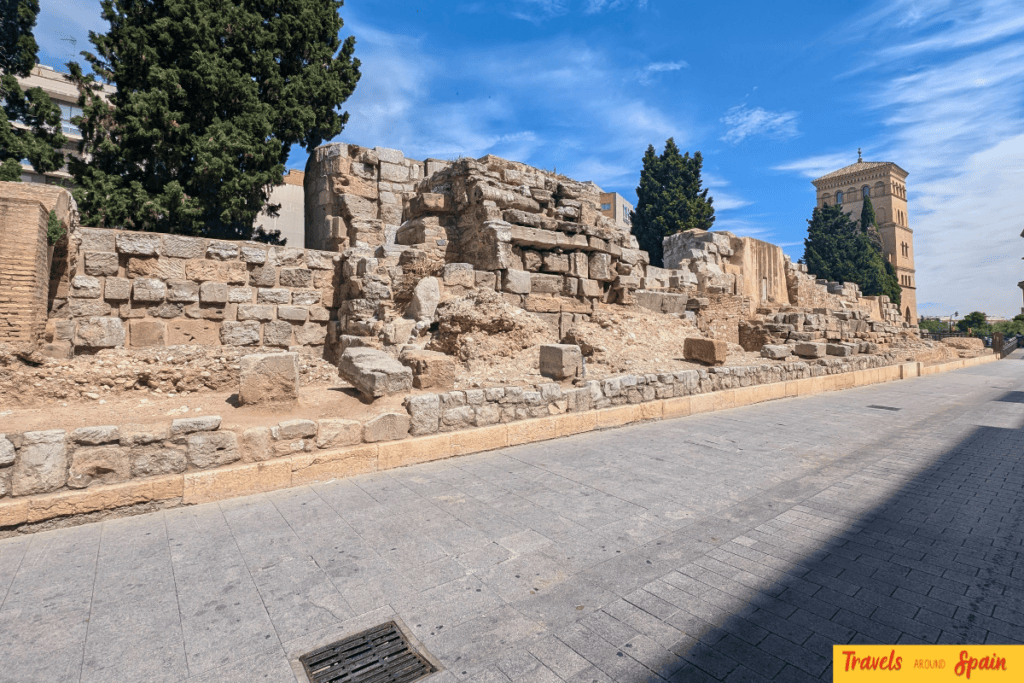
One of the best places to experience Zaragoza’s Roman past is the Roman Theatre Museum. Built during the 1st century AD, the theatre could once hold thousands of spectators and gives a fascinating glimpse into what life would have looked like during the Roman Empire.
Today, you can walk around the excavated remains whilst learning more about the development of Caesaraugusta and its importance within Roman Hispania. Even if you are not a huge history enthusiast, it is impressive seeing such substantial Roman ruins sitting right in the middle of a modern Spanish city.
Caesaraugusta Route
If you want to dive deeper into Zaragoza’s Roman history, the Caesaraugusta Route connects several Roman archaeological sites across the city. These include the Roman Theatre, Forum Museum, River Port Museum, and Public Baths Museum.
What I liked most about Zaragoza’s Roman sites was how accessible they felt. You are not dealing with enormous tourist crowds or huge archaeological complexes. Instead, Roman history feels naturally integrated into everyday life in the city, which somehow makes it even more interesting to explore.
Experience Zaragoza’s Tapas Scene In El Tubo
No visit to Zaragoza is complete without spending an evening exploring El Tubo, the city’s most famous tapas district. Located in the heart of the old town, this lively network of narrow streets is packed with traditional tapas bars, local restaurants, and busy terraces.
Compared to tapas areas in cities like Madrid or Barcelona, El Tubo felt noticeably more local and less touristy. The atmosphere was lively without feeling overwhelming, and it quickly became one of my favourite parts of Zaragoza.
What Makes El Tubo Special
The thing that immediately stands out about El Tubo is the atmosphere. Rather than large restaurant chains or tourist-heavy venues, most bars are small, busy, and filled with locals meeting friends after work or gathering for long evening meals.
The narrow streets are full of energy with outdoor terraces, hanging signs, and packed bars spilling out onto the pavements. It is the kind of place where you can easily spend several hours wandering between different spots trying local dishes and regional wines.
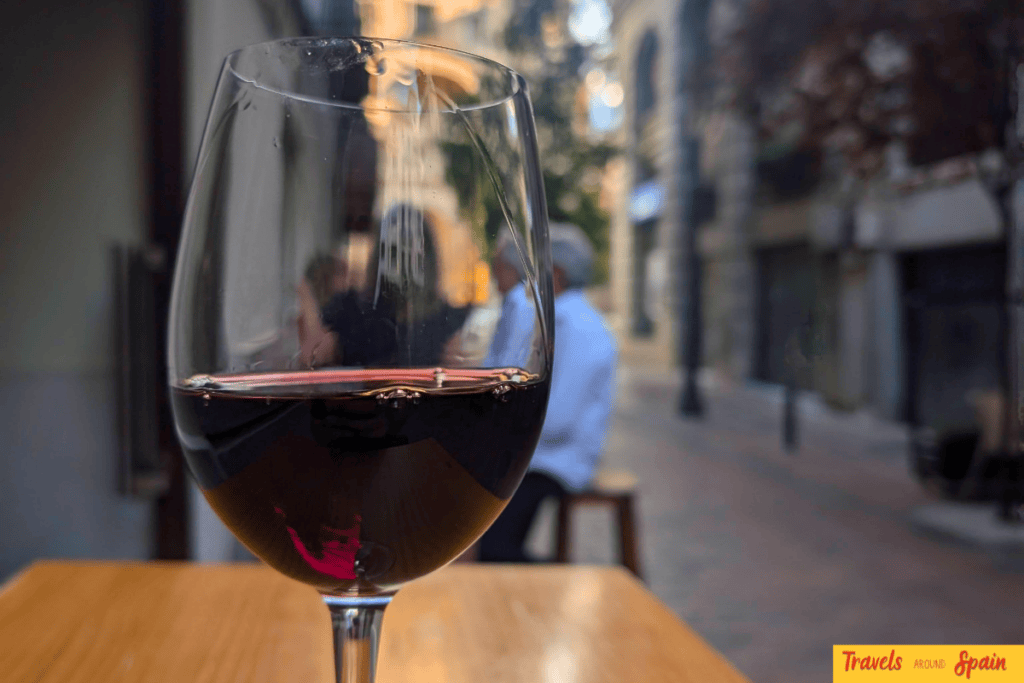
Another thing Zaragoza does really well is value for money. Even in the busiest areas of El Tubo, food and drinks still felt far more affordable than in many of Spain’s major tourist cities.
Best Foods To Try
Alongside ternasco de Aragón, there are plenty of other regional dishes worth trying in Zaragoza including jamón, croquetas, grilled meats, local cheeses, and pintxos-style tapas.
If possible, avoid staying in just one restaurant all evening. Like in many Spanish cities, part of the experience is moving between different bars and trying a speciality or two in each one. It makes the evening feel far more social and gives you a much better sense of Zaragoza’s food culture.
Relax Along The Ebro River
One of the things that gives Zaragoza a very different feel from cities like Madrid or Barcelona is the River Ebro. Flowing directly through the centre of the city, the river creates a much calmer atmosphere and gives Zaragoza a more open, relaxed feel than many other major Spanish cities.
The riverside paths are ideal for walking, especially around the area near the Basilica del Pilar and Puente de Piedra. After spending time exploring churches, museums, and tapas bars, the riverfront feels like a nice change of pace.
I particularly enjoyed this part of Zaragoza during the evenings when locals came out for walks, bike rides, and drinks along the waterfront. Even though Zaragoza is one of Spain’s biggest cities, there were moments around the river that felt surprisingly peaceful.
The Ebro also gives you some of the best viewpoints in the city. Looking back towards the Basilica del Pilar from the opposite riverbank or from Puente de Piedra is easily one of the most iconic scenes in Zaragoza. Around sunset, the light reflecting off the basilica’s domes and towers makes the whole skyline look even more impressive.
If you are visiting Zaragoza during warmer months, spending some time around the river is also a good way to escape the busiest parts of the old town and experience a more local side of the city.
Take A Day Trip From Zaragoza
Zaragoza is not only a great city break destination, but also a really useful base for exploring more of Aragón. Thanks to its central location and excellent transport connections, there are several interesting day trips you can easily take from the city.
Monasterio de Piedra
One of the most popular day trips from Zaragoza is Monasterio de Piedra, a former monastery surrounded by waterfalls, lakes, caves, and walking trails. It feels completely different from Zaragoza itself and is one of the most beautiful natural areas in Aragón.
The park is especially popular during spring and summer when the waterfalls are at their most impressive. If you want a break from city sightseeing, this is probably the best day trip option from Zaragoza.
Belchite
For something far more unusual, Belchite is one of the most fascinating places to visit near Zaragoza. The village was heavily destroyed during the Spanish Civil War and parts of the original town were left abandoned as a memorial.
Walking through the ruined streets feels very different from most tourist attractions in Spain and offers a sobering insight into one of the country’s most important historical conflicts.
Tarazona
Located near the border with Castilla y León and La Rioja, Tarazona is a smaller historic town known for its Mudéjar architecture, colourful buildings, and impressive cathedral.
Compared to some of Spain’s more famous historic towns, Tarazona remains relatively under the radar, which makes it a great option if you are looking for somewhere quieter and more local. The mix of Christian, Jewish, and Islamic influences also gives it a very distinctive character that reflects much of Aragón’s wider history.
Why Zaragoza Feels Different From Other Spanish Cities
Part of what makes Zaragoza stand out is how balanced the city feels. It is large enough to have impressive landmarks, excellent food, great transport connections, and plenty of things to do, but without the overwhelming tourism found in cities like Barcelona or Madrid.
Throughout my visit, Zaragoza felt far more local and relaxed than many of Spain’s better-known destinations. Even around major attractions like the Basilica del Pilar, the atmosphere never felt excessively crowded or rushed. Instead, the city seemed to operate primarily for locals rather than tourists, which gave it a much more authentic feel.
I also think Zaragoza benefits from being slightly overlooked internationally. Because fewer visitors prioritise it on their Spain itinerary, you often get a much calmer experience whilst still enjoying many of the advantages of a major Spanish city.
For me, Zaragoza was one of the biggest surprises of my northern Spain trip. Between the incredible basilica, excellent food scene, fascinating history, and relaxed atmosphere, it ended up being far more memorable than I expected before arriving.
If you are still deciding whether to include the city in your Spain itinerary, you can also read my full guide on whether Zaragoza is worth visiting.
Practical Tips For Visiting Zaragoza
Zaragoza is a very easy city to visit, especially compared to some of Spain’s larger and busier destinations. Its compact historic centre, excellent transport connections, and relatively low tourist numbers make it a surprisingly stress-free city break.
How To Get To Zaragoza
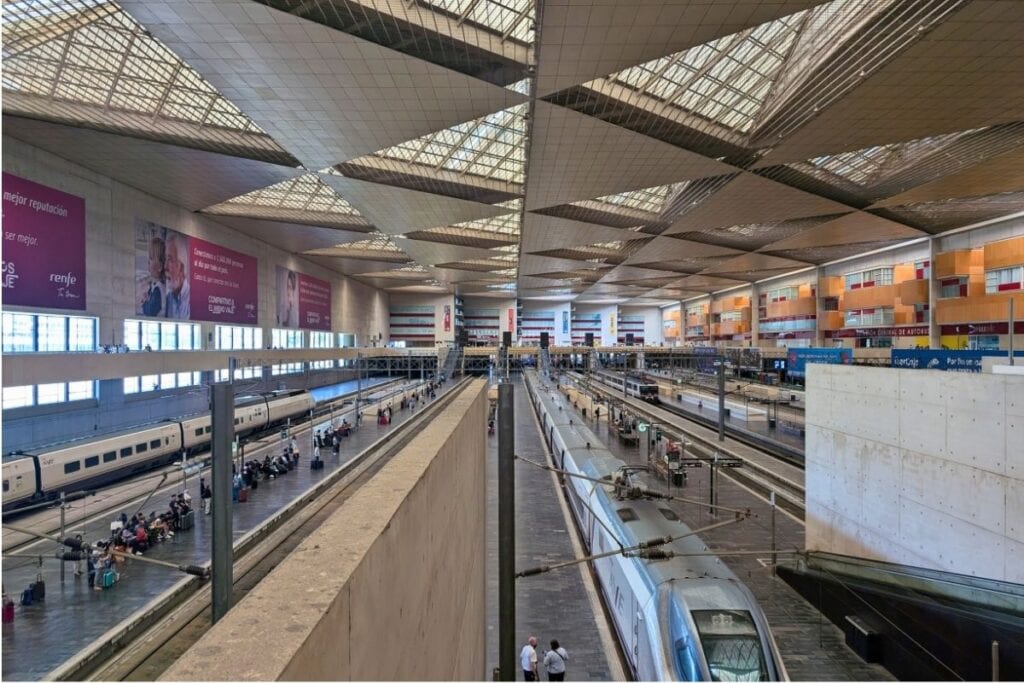
One of Zaragoza’s biggest advantages is its location between Madrid and Barcelona on Spain’s AVE high-speed rail network. Trains from both cities are fast, comfortable, and make Zaragoza an ideal stopover destination if you are travelling across Spain.
I visited Zaragoza as part of a northern Spain itinerary after travelling through Bilbao, Logroño, and Pamplona before continuing onwards to Barcelona. The city works really well as part of a wider Spain route because it is so well-connected.
From Zaragoza-Delicias station, there are regular buses into the city centre and taxis are also reasonably priced.
Where To Stay
For most visitors, staying in or around Zaragoza’s old town is the best option. This puts you within walking distance of major attractions like the Basilica del Pilar, La Seo Cathedral, El Tubo, and many of the city’s best restaurants and tapas bars.
If food and nightlife are priorities, staying close to El Tubo is a great choice because the area becomes particularly lively during the evenings.
How Many Days You Need
Many visitors stop in Zaragoza for just one day whilst travelling between Madrid and Barcelona, but the city deserves longer if you have the time.
I stayed for three nights and found that gave me enough time to properly enjoy the food scene, major attractions, and relaxed atmosphere without rushing. If you are planning a longer visit, check out my full 2 days in Zaragoza itinerary for a more detailed breakdown of how to spend your time in the city.
Best Time To Visit
Spring and autumn are probably the best times to visit Zaragoza when temperatures are warm without becoming too intense. Summers in Zaragoza can get extremely hot, particularly during July and August when sightseeing in the middle of the day can feel exhausting.
I visited Zaragoza in June during a northern Spain trip and found the weather hot but still very manageable for exploring the city comfortably. Evenings were especially pleasant for walking along the River Ebro and spending time in El Tubo enjoying tapas and drinks outside.
Frequently Asked Questions
What Is Zaragoza Famous For?
Zaragoza is best known for the Basilica del Pilar, one of the largest and most important churches in Spain. The city is also famous for its Moorish architecture, Roman history, tapas culture, and its location between Madrid and Barcelona.
Is Zaragoza Worth Visiting?
Yes, Zaragoza is absolutely worth visiting, especially if you are looking for a less touristy Spanish city with impressive landmarks, great food, and a more local atmosphere. Despite being one of Spain’s biggest cities, it receives far fewer international tourists than places like Madrid or Barcelona.
How Many Days Do You Need In Zaragoza?
Many visitors see Zaragoza in one day whilst travelling between Madrid and Barcelona, but two to three days allows you to experience the city at a much more relaxed pace. This gives you enough time to visit the main attractions, explore El Tubo, and enjoy Zaragoza’s food scene properly.
Is Zaragoza Walkable?
Yes, Zaragoza is a very walkable city. Most major attractions including the Basilica del Pilar, La Seo Cathedral, El Tubo, and the Roman ruins are located within or close to the old town.
What Food Is Zaragoza Known For?
Zaragoza is particularly famous for ternasco de Aragón, a traditional roast lamb dish from the Aragón region. The city is also known for tapas, grilled meats, local wines, and hearty regional cuisine.
Is Zaragoza Cheaper Than Madrid Or Barcelona?
Generally, yes. I found Zaragoza noticeably more affordable than both Madrid and Barcelona, especially when it came to accommodation, tapas, and menú del día restaurants. Despite being one of Spain’s largest cities, prices still felt very reasonable overall.
Final Thoughts
Zaragoza ended up being one of the biggest surprises of my northern Spain trip. Before visiting, I mainly saw it as a convenient stop between other destinations, but it quickly became much more than that. Between the enormous Basilica del Pilar, the fantastic food scene, fascinating history, and relaxed atmosphere, Zaragoza felt like a city that deserved far more attention than it gets internationally.
What makes Zaragoza so appealing is the balance it offers. You still get impressive landmarks, beautiful architecture, lively tapas bars, and plenty of cultural attractions, but without the overwhelming crowds that often come with Spain’s more famous cities. It feels authentic, affordable, and much more local whilst still being incredibly easy to visit thanks to the high-speed rail connections from Madrid and Barcelona.
Whether you are stopping for a day or planning a longer city break, Zaragoza is one of those places that quietly exceeds expectations. I arrived curious about Aragón’s largest city and left wondering why more people do not include it on their Spain itinerary.