Is Zaragoza Worth Visiting? Spain’s Most Underrated City
Zaragoza surprised me with grand basilicas, authentic food, and fewer tourists.
By Liam Mulligan | Published on June 15, 2026 | Modified on June 15, 2026
Travels Around Spain contains affiliate links. This means I may earn a commission if you make a purchase or booking through these links, at no extra cost to you. As an Amazon Associate I earn from qualifying purchases. I only recommend products and services I use and trust. Read my full Affiliate Disclosure for more information.
Is Zaragoza worth visiting? Before visiting in 2024, I honestly wasn’t sure. Despite being one of the biggest cities in Spain, Zaragoza rarely gets mentioned alongside places like Madrid, Barcelona, Seville, or Valencia. I added it to my northern Spain itinerary mostly because I wanted to explore Aragón for the first time, not because I expected it to become one of my favourite stops of the trip.
What surprised me most was just how impressive Zaragoza actually is. The Basilica del Pilar completely blew me away with its sheer scale and grandeur, while the city itself felt far more authentic and relaxed than many of Spain’s more famous destinations. Even though Zaragoza is a large city, it never felt overcrowded or overly touristy.
Add in fantastic food, beautiful riverside views, fascinating history, and excellent high-speed train connections from Madrid and Barcelona, and I quickly started wondering why more people don’t visit.
After spending three nights exploring the city, I genuinely think Zaragoza is one of the most underrated cities in Spain.
PLAN YOUR TRIP TO Zaragoza
Trusted resources for planning your Zaragoza trip.
Hotels in Zaragoza – Find hotels near Plaza del Pilar and Zaragoza’s historic centre.
Aljafería Palace Tours & Tickets – Browse tours and tickets for Zaragoza’s stunning Moorish palace.
Why Zaragoza Is Often Overlooked By Tourists
Despite being one of the largest cities in Spain, Zaragoza rarely appears on the typical first-time Spain itinerary. After visiting, I honestly found that surprising because the city offers many of the things travellers love about Spain, just with fewer crowds and a more authentic atmosphere.
Overshadowed By Spain’s Famous Cities
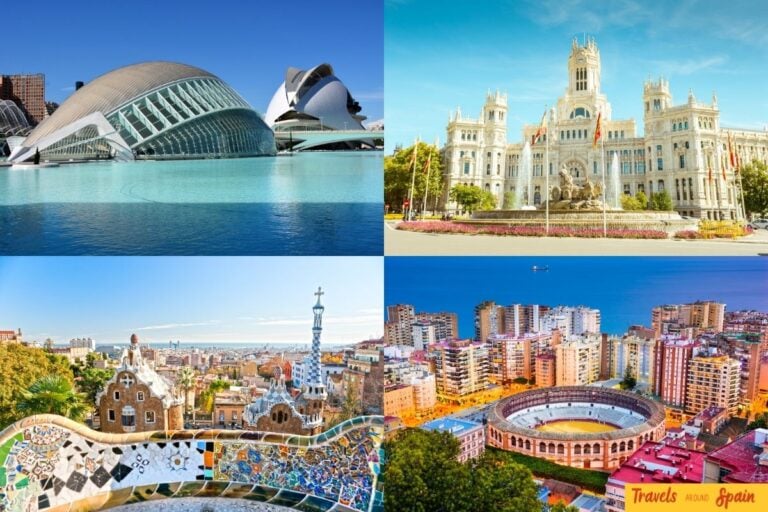
When most people plan a trip to Spain, the same destinations usually dominate the conversation. Madrid offers world-class museums and nightlife, Barcelona has Gaudí architecture and beaches, Seville is famous for flamenco and Andalusian charm, while Valencia has become increasingly popular for city breaks and food tourism.
Zaragoza, meanwhile, often gets ignored.
That’s quite surprising when you consider that Zaragoza is actually Spain’s fifth-largest city and sits directly between Madrid and Barcelona on the high-speed AVE rail line. Millions of travellers pass through Aragón every year without ever stopping.
I think part of the reason is that Zaragoza doesn’t market itself internationally in the same way as Spain’s bigger tourism giants. It also lacks one single globally famous attraction that instantly puts it on bucket lists, despite the Basilica del Pilar being one of the most impressive churches I’ve seen anywhere in Spain.
Because of this, Zaragoza often becomes somewhere people simply overlook rather than actively choose not to visit.
Why That Actually Makes Zaragoza Better
Ironically, I think Zaragoza’s lower international profile is exactly what makes it so enjoyable.
One of the things I loved most about the city was how authentic it felt. Even in the areas around the basilica and old town, you don’t get the same overwhelming crowds you often experience in Barcelona or central Madrid. Instead, Zaragoza feels like a city that still primarily belongs to locals rather than tourists.
That creates a completely different atmosphere. Restaurants feel more relaxed, prices are generally more reasonable, and you can actually enjoy major attractions without fighting through huge tour groups.
Despite this, Zaragoza still has everything you’d want from a major Spanish city. There’s impressive architecture, fantastic food, plenty of history, good nightlife, walkable neighbourhoods, and excellent transport connections. It feels large and lively without becoming exhausting.
In many ways, Zaragoza offers a version of Spain that can feel harder to find in some of the country’s most famous destinations. It has the energy of a big city while still feeling genuinely local and distinctly Aragonese.
What Surprised Me Most About Zaragoza
Before arriving in Zaragoza, I expected an interesting stop between Pamplona and Barcelona. What I didn’t expect was a city that would genuinely surprise me in multiple ways. From the scale of its landmarks to the relaxed atmosphere and underrated food scene, Zaragoza ended up exceeding my expectations far more than I anticipated.
The Basilica Del Pilar Completely Blew Me Away
The biggest surprise by far was the Basilica del Pilar.
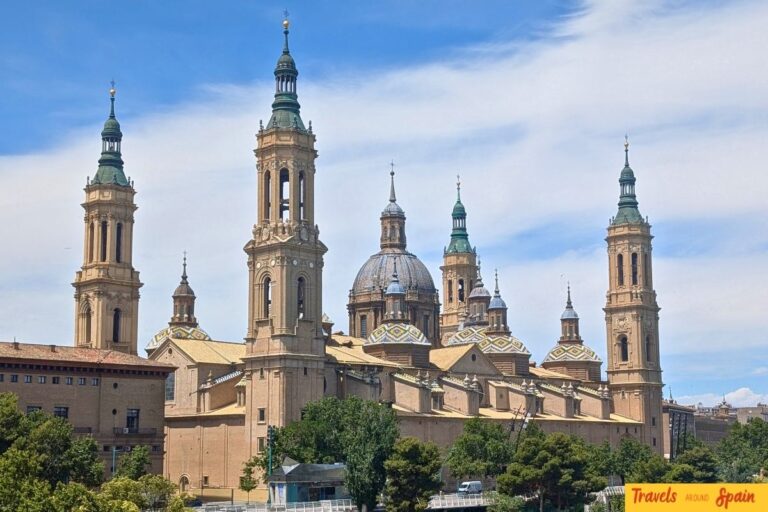
I’ve visited a lot of churches and cathedrals across Spain over the years, including some of the country’s most famous landmarks, but the sheer scale of the basilica genuinely stunned me. Seeing it rise above the Ebro River for the first time was one of those moments that immediately makes you stop walking and just stare.
The best view is from across the bridge, where you can fully appreciate the size of the domes and the basilica’s enormous presence on the skyline. It honestly felt every bit as grand and impressive as some of Spain’s more internationally famous landmarks.
The interior was even more incredible. The amount of detail inside is absolutely insane, and it somehow still feels surprisingly peaceful despite its size. Alongside the Sagrada Familia in Barcelona, it’s probably the most impressive church interior I’ve seen in Spain.
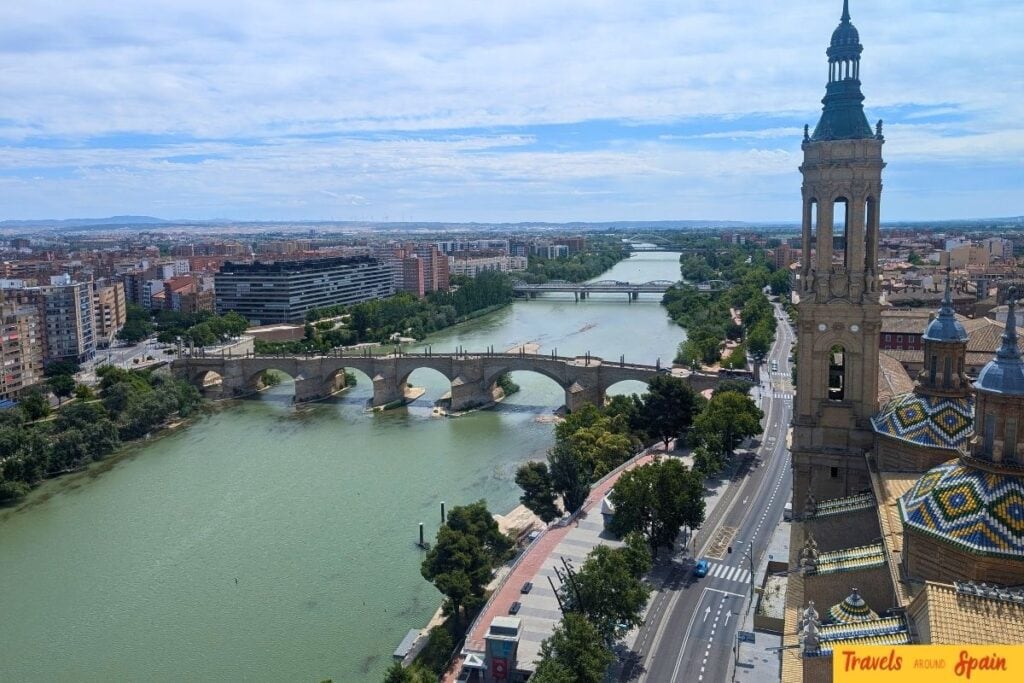
One of my favourite experiences in Zaragoza was going up the basilica tower. The panoramic views across the rooftops, the river, and the wider city were fantastic and gave a real sense of Zaragoza’s scale.

Photo by Travels Around Spain.
Zaragoza Felt Big But Relaxed
Another thing that stood out to me was the atmosphere of the city itself.
Even though Zaragoza is one of the largest cities in Spain, it felt much calmer and less hectic than places like Madrid or Barcelona. There were still plenty of people around and lots happening, but without the overwhelming crowds that can sometimes make Spain’s biggest tourist destinations feel exhausting.
I really liked that balance. Zaragoza still has the energy, restaurants, nightlife, and attractions you’d expect from a major city, but it feels far more manageable and local. Walking through the old town or along the river felt relaxed rather than rushed.
It also felt noticeably less touristy. You hear far more Spanish being spoken around you, restaurants cater more towards locals, and the city overall feels more authentically lived-in rather than designed around tourism.
The Food Was Better Than Expected
I also wasn’t expecting the food to be such a highlight.
Before visiting Aragón, I honestly knew very little about the region’s cuisine. One thing that really surprised me was discovering ternasco, Aragón’s famous roast lamb dish. I tried it as part of a menú del día in a traditional restaurant with old stone walls and a really cosy atmosphere, and it ended up being one of my favourite meals of the trip.
Like much of Zaragoza, the food felt authentic and unpretentious. Meals were generally very reasonably priced compared to some of Spain’s more tourist-heavy cities, and the tapas areas had a lively local atmosphere without feeling overcrowded.
I came away feeling that Aragón’s food scene deserves far more attention internationally because there’s a lot more to it than many visitors probably realise.

Photo by Travels Around Spain.
Best Things To Do In Zaragoza
One of the things that surprised me most about Zaragoza was how much there actually is to do. Before visiting, I mainly associated the city with the Basilica del Pilar, but I quickly realised there’s enough here to comfortably fill a long weekend without rushing.
Visit Basilica Del Pilar
If you only do one thing in Zaragoza, make it this.
The Basilica del Pilar completely dominates the city skyline and is easily one of the most impressive religious buildings in Spain. Sitting beside the Ebro River, its enormous domes and towers are visible from all across the city.
It’s not just me saying that either. The basilica was voted one of the 12 Treasures of Spain, putting it alongside some of the country’s most famous landmarks and monuments.
Inside, the basilica is just as impressive. The scale, artwork, and detail are incredible, and despite being such a major attraction, it still retains a peaceful atmosphere.
Even if you’re not particularly interested in churches or religious sites, I still think the basilica is worth visiting purely because of how visually stunning it is.
Go Up The Basilica Tower
For me, this was one of the highlights of Zaragoza.
You can take a lift up one of the basilica towers for panoramic views across the city, the Ebro River, and Zaragoza’s rooftops. It also gives you a much better sense of the city’s scale, which surprised me more than I expected.
The views are especially good around sunset when the warm light hits the basilica domes and surrounding buildings.
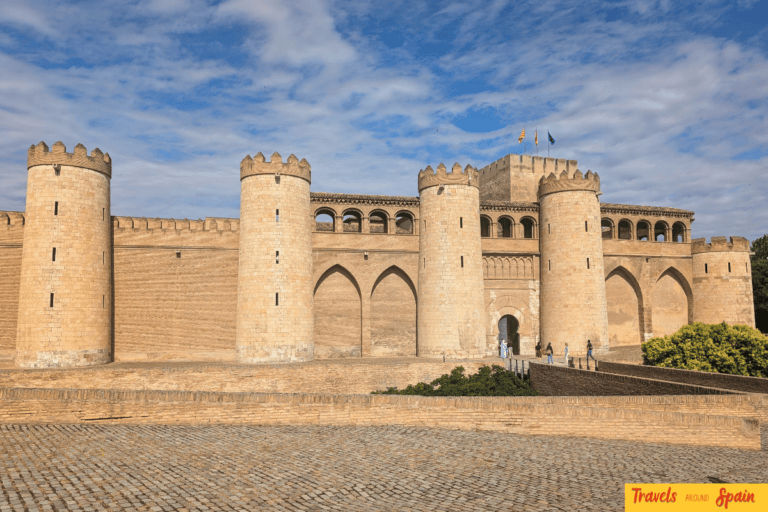
Explore Aljafería Palace
One attraction I knew very little about before visiting Zaragoza was Aljafería Palace, but it ended up being one of the highlights of my trip.
Originally built as an Islamic fortress during the Taifa period, the palace later became a royal residence for Christian monarchs. Because of that, the architecture reflects multiple periods of Spanish history all in one place.
The intricate Islamic details inside are particularly impressive and actually reminded me a little of Andalucía’s famous Moorish landmarks, just without the huge crowds.
I also liked how much quieter it felt compared to Spain’s more famous palaces and historic sites. It gave me far more time to properly appreciate the architecture and atmosphere without feeling rushed.

Photo by Travels Around Spain.
Walk Along The Ebro River
The Ebro River gives Zaragoza a really open and relaxed feel compared to some other Spanish cities.
Walking along the riverside is one of the best ways to appreciate the city skyline, especially around the basilica and nearby bridges. Crossing the bridge beside the Basilica del Pilar was one of my favourite simple moments in Zaragoza because the views are genuinely spectacular.
It’s also a nice area to slow down after exploring the old town.
Explore Zaragoza’s Tapas Areas
One thing I loved about Zaragoza was how local the tapas scene felt.
Unlike in some heavily touristed cities, many of the bars and restaurants here still feel very geared towards locals rather than visitors. Areas around El Tubo are particularly popular for tapas hopping, with lots of small bars packed close together.
This was also where Zaragoza’s relaxed atmosphere stood out most to me. Even in busy areas, the city never felt overwhelmingly crowded.
Discover Roman Zaragoza
A lot of people don’t realise Zaragoza has significant Roman history.
The city was originally founded as the Roman settlement of Caesaraugusta, and you can still visit Roman ruins and museums throughout the city today. Sites like the Roman Theatre help show just how historically important Zaragoza once was.
It adds another interesting layer to the city beyond the basilica and medieval architecture.
How Many Days Do You Need In Zaragoza?
One of the things I liked most about Zaragoza was that it works well for different types of trips. Whether you are passing through on the train between Madrid and Barcelona or planning a slower city break, there’s enough here to make Zaragoza feel worthwhile without becoming overwhelming.
Is Zaragoza Worth A Day Trip?
Yes, Zaragoza absolutely works as a day trip, especially thanks to Spain’s excellent high-speed rail network. The city sits directly between Madrid and Barcelona, making it incredibly easy to reach from either destination.
If you only have a day, you can comfortably visit major attractions like the Basilica del Pilar, Aljafería Palace, and the riverside areas, whilst still having time to enjoy some tapas in the old town.
That said, I do think Zaragoza deserves more than a rushed stop between trains.
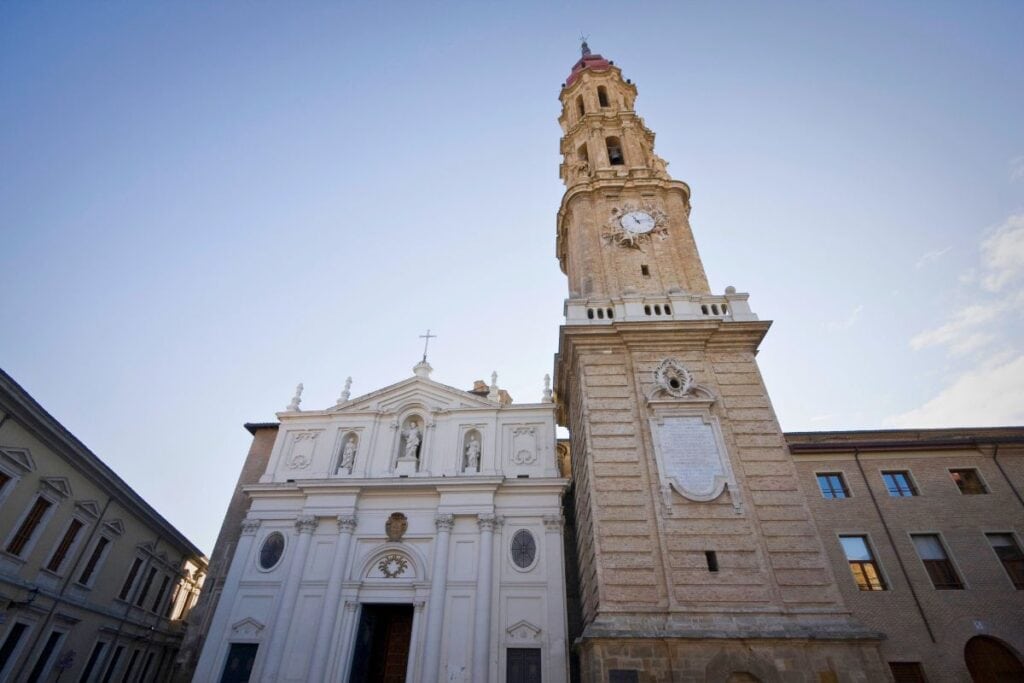
Photo by Travels Around Spain.
Why I Think 2–3 Days Is Ideal
I spent three nights in Zaragoza, and for me, it felt like the perfect amount of time.
Part of what makes Zaragoza enjoyable is its relaxed atmosphere. Unlike some of Spain’s larger tourist cities, where you can feel pressure to constantly sightsee, Zaragoza is somewhere that feels better at a slower pace. It’s the kind of city where you can spend time wandering through the old town, stopping for long lunches, or simply enjoying the atmosphere around the Ebro River without feeling like you are missing out.
Having extra time also allowed me to experience more than just the major attractions. Some of my favourite moments were actually the quieter ones, like walking across the bridge beside the basilica at sunset or discovering traditional local restaurants serving Aragonese food.
For most travellers, though, I think 2 days in Zaragoza is probably the sweet spot. That gives you enough time to see the main sights whilst still experiencing the city’s slower and more authentic atmosphere.
Is Zaragoza Better Than Madrid Or Barcelona?
This probably depends on what you are looking for from a trip to Spain.
If you want huge museums, world-famous landmarks, endless nightlife, and a truly international atmosphere, then Madrid and Barcelona are still hard to beat. There’s a reason they are two of the most visited cities in Europe.
But I actually think Zaragoza offers something that can feel surprisingly refreshing after visiting Spain’s bigger tourist hotspots.
What Zaragoza Does Better
The biggest difference for me was the atmosphere.
Zaragoza feels far more relaxed and local than either Madrid or Barcelona. Even around the main attractions, the city never felt overwhelmingly crowded or overly geared towards international tourism. That made the experience feel much more authentic and less exhausting overall.
I also found Zaragoza noticeably better value. Hotels, restaurants, and tapas bars generally felt more affordable than in Spain’s larger tourist cities, especially compared to Barcelona.
Another thing I appreciated was how manageable the city feels. You still get impressive architecture, great food, history, shopping, and nightlife, but without needing to constantly battle huge crowds or spend hours crossing the city.
In some ways, Zaragoza reminded me of what people often hope Spain will feel like before arriving in the country for the first time. Busy enough to feel lively, but still local enough to feel genuinely Spanish.
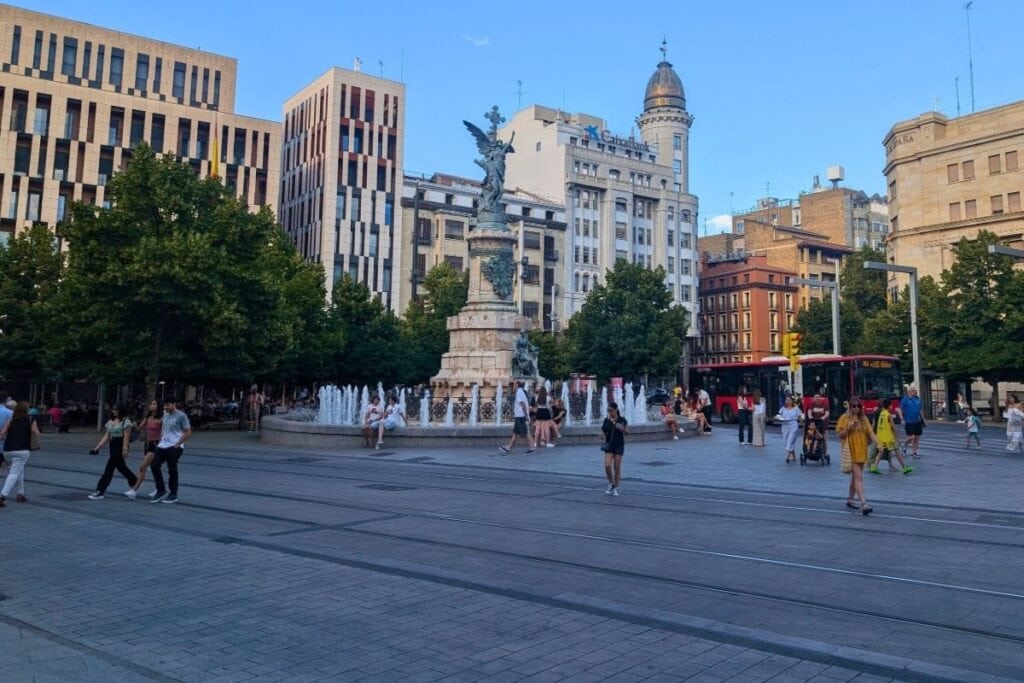
Photo by Travels Around Spain.
What Madrid And Barcelona Still Do Better
That said, I don’t think Zaragoza replaces Madrid or Barcelona entirely.
Madrid has some of the best museums in Europe, while Barcelona offers globally famous architecture and a unique mix of city and beach culture that Zaragoza simply can’t compete with.
There’s also more variety overall in terms of nightlife, international dining, major attractions, and day trips in both cities.
But I do think Zaragoza works brilliantly as an alternative for travellers who want to experience a large Spanish city without the intensity of Spain’s biggest tourist destinations.
For me, that balance is exactly what made Zaragoza such a pleasant surprise.
Practical Tips For Visiting Zaragoza
Zaragoza is one of the easiest major cities to visit in Spain, especially if you are already travelling between Madrid and Barcelona.
How To Get To Zaragoza
One of Zaragoza’s biggest advantages is its location. The city sits directly on Spain’s high-speed AVE rail line between Madrid and Barcelona, making it incredibly convenient to visit from either city.
I travelled to Zaragoza as part of a northern Spain itinerary and found the train connections really straightforward. The journey from Barcelona takes around 90 minutes, while Madrid is only slightly longer.
Once you arrive at Zaragoza-Delicias station, there are regular buses and taxis to the city centre, so getting into the old town is very easy.
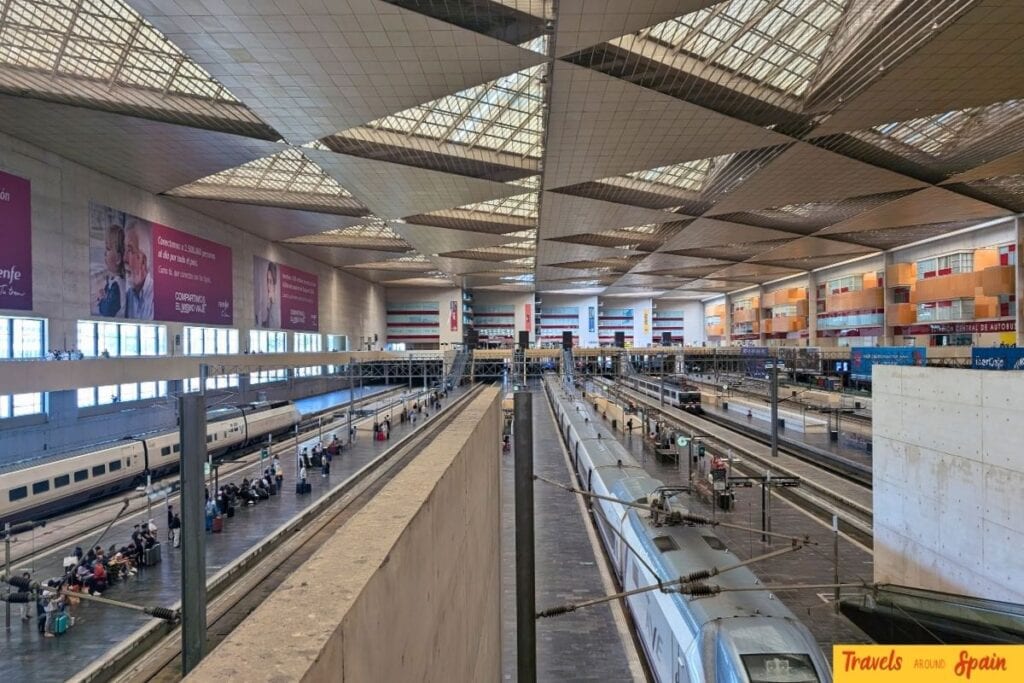
Photo by Travels Around Spain.
Where To Stay In Zaragoza
I’d personally recommend staying somewhere close to the old town or near the tapas areas around El Tubo.
That gives you easy access to most of Zaragoza’s main attractions including the Basilica del Pilar, the riverfront, restaurants, and nightlife. One thing I liked about Zaragoza is that many of the main sights are within walking distance of each other, so the city is fairly easy to explore on foot.
Staying centrally also makes it much easier to experience Zaragoza in the evenings when the tapas bars and plazas become much livelier.
Best Time To Visit Zaragoza
I visited Zaragoza in June, and it was definitely hot. Because the city is located inland, temperatures can climb quickly during summer, especially in the middle of the day when sightseeing around the basilica and old town can feel quite intense.
For that reason, I’d probably say spring and autumn are the most comfortable times to visit if you plan to spend a lot of time walking around the city. The warmer weather is still great for sitting outside at tapas bars and enjoying the riverside areas, just without the peak summer heat.
That said, Zaragoza feels far less seasonal than many Spanish destinations because it’s a proper working city rather than somewhere built entirely around tourism. Even outside peak travel periods, the city still feels lively and authentic.
Who Should Visit Zaragoza?
Zaragoza is the kind of city that I think appeals most to travellers looking for a more authentic side of Spain without completely sacrificing the atmosphere and attractions of a major city.
Perfect For Travellers Who Want Authentic Spain
If you enjoy visiting places that feel more local and less dominated by tourism, Zaragoza is a great choice.
One of the things I appreciated most was that the city still felt genuinely Spanish. Restaurants, tapas bars, and public spaces mostly felt geared towards locals rather than international visitors, which gave the whole city a much more relaxed and authentic atmosphere.
It’s the sort of place where you can still experience everyday Spanish life whilst also visiting major landmarks and historical sites.
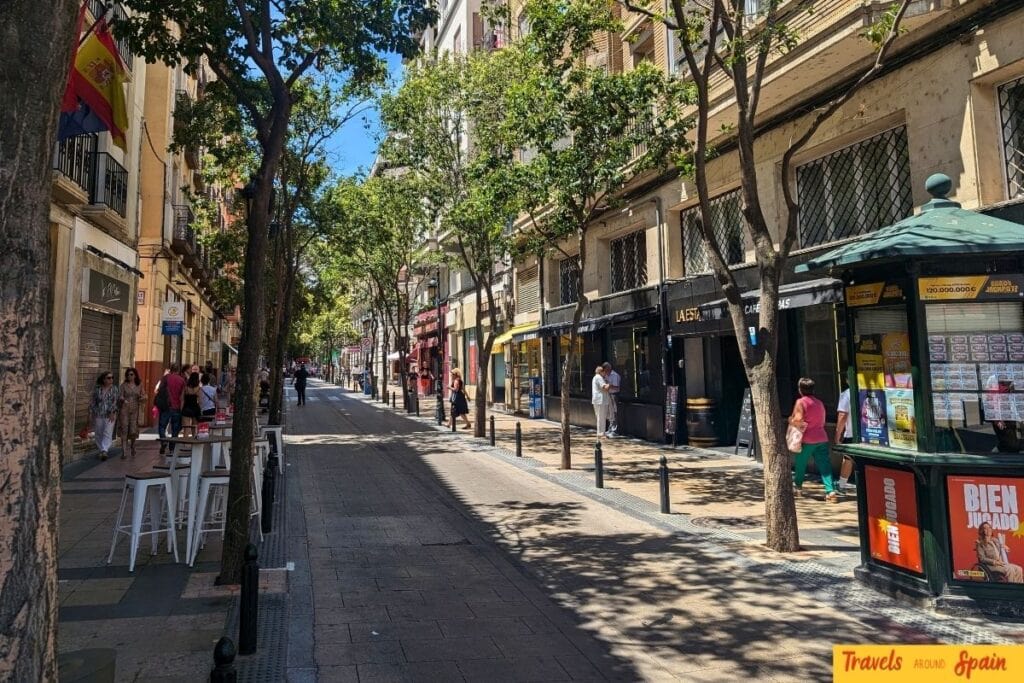
Photo by Travels Around Spain.
Great For Foodies And History Lovers
Zaragoza is also an excellent destination if you enjoy food and history.
Between the Basilica del Pilar, Aljafería Palace, Roman ruins, and historic old town, there’s a huge amount of history packed into the city. I also think Aragón’s food scene deserves far more attention than it gets internationally.
Trying traditional dishes like ternasco ended up being one of the highlights of my trip, especially because the restaurants felt so local and unpretentious compared to some more tourist-heavy cities in Spain.
Ideal For Northern Spain Itineraries
I actually think Zaragoza works especially well as part of a wider northern Spain itinerary.
That was how I visited the city, travelling from Bilbao to Logroño, then Pamplona, Zaragoza, and finally Barcelona. Because Zaragoza sits between Madrid and Barcelona on the AVE line, it’s incredibly easy to include as part of a broader Spain trip.
It also offers a really nice contrast to some of Spain’s more visited destinations. After busier places, Zaragoza’s slower pace and more relaxed atmosphere can feel genuinely refreshing.
FAQs
Is Zaragoza worth visiting for tourists?
Yes, I definitely think Zaragoza is worth visiting, especially if you want to experience a large Spanish city without the overwhelming crowds of places like Madrid or Barcelona. It has impressive landmarks, fantastic food, plenty of history, and a much more relaxed atmosphere than many of Spain’s more famous destinations.
How many days do you need in Zaragoza?
I think two days is ideal for most travellers. That gives you enough time to visit the main attractions like the Basilica del Pilar and Aljafería Palace whilst also enjoying Zaragoza’s slower pace and local food scene. I stayed for three nights and never felt rushed.
Is Zaragoza expensive?
Compared to cities like Madrid and Barcelona, I found Zaragoza noticeably more affordable. Restaurants, tapas bars, and accommodation generally offered much better value, especially considering Zaragoza is still one of Spain’s largest cities.
What is Zaragoza famous for?
Zaragoza is best known for the Basilica del Pilar, which was voted one of the 12 Treasures of Spain. The city is also famous for its Moorish architecture, Roman history, tapas culture, and its location along the Ebro River.
Is Zaragoza better than Valencia?
I think they offer quite different experiences. Valencia feels more international and has beaches, bigger tourist infrastructure, and a more Mediterranean atmosphere. Zaragoza, meanwhile, feels more local, relaxed, and underrated. If you prefer authentic city experiences with fewer tourists, Zaragoza may actually appeal more.
Can you visit Zaragoza as a day trip from Madrid or Barcelona?
Yes, Zaragoza works really well as a day trip thanks to the AVE high-speed train network. The city is located between Madrid and Barcelona, with relatively quick journey times from both. That said, I do think Zaragoza is worth staying overnight if you have the time.
Final Thoughts
Before visiting, I honestly didn’t expect Zaragoza to become one of my favourite stops on my northern Spain trip. Like many travellers, I mainly associated Spain with places like Madrid, Barcelona, Seville, and Valencia, while Zaragoza barely featured on my radar at all.
After spending a few days exploring the city, though, I completely understood the appeal.
Between the incredible Basilica del Pilar, the relaxed atmosphere, fantastic food, fascinating history, and noticeably fewer tourists, Zaragoza felt like a side of Spain that can sometimes feel harder to find in the country’s bigger destinations.
What I liked most was the balance Zaragoza offers. It still has the energy and attractions of a major city, but without the crowds and intensity that often come with Spain’s biggest tourist hotspots. Instead, it feels authentic, manageable, and genuinely enjoyable to explore at a slower pace.
So, is Zaragoza worth visiting?
For me, absolutely yes.
In fact, I’d go as far as saying it’s one of the most underrated cities in Spain and somewhere I think far more travellers should consider adding to their itinerary.
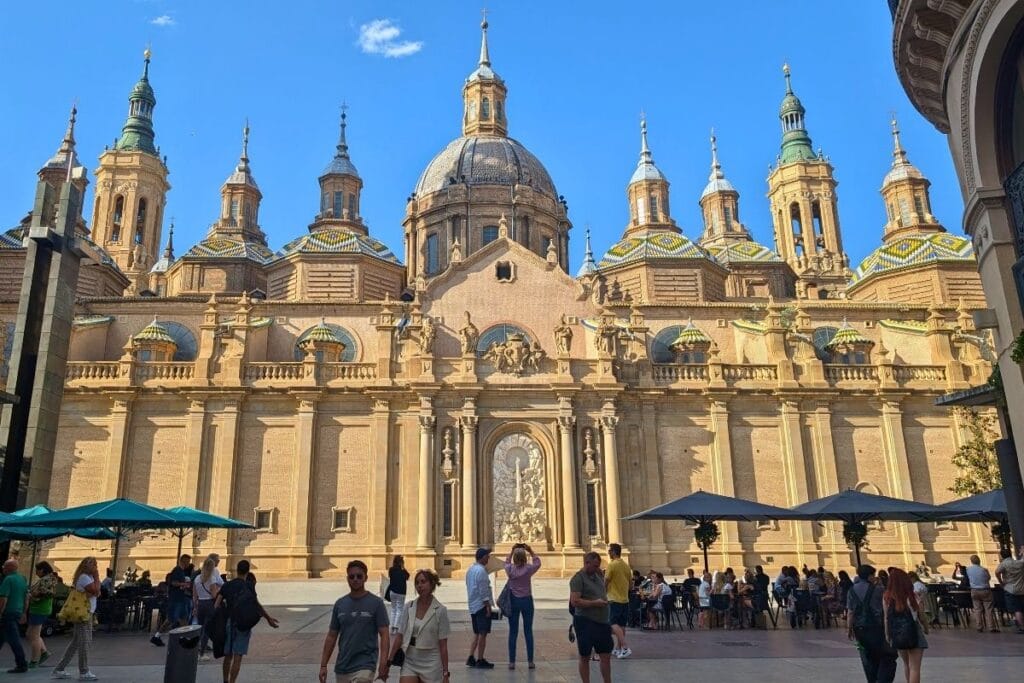
Photo by Travels Around Spain.