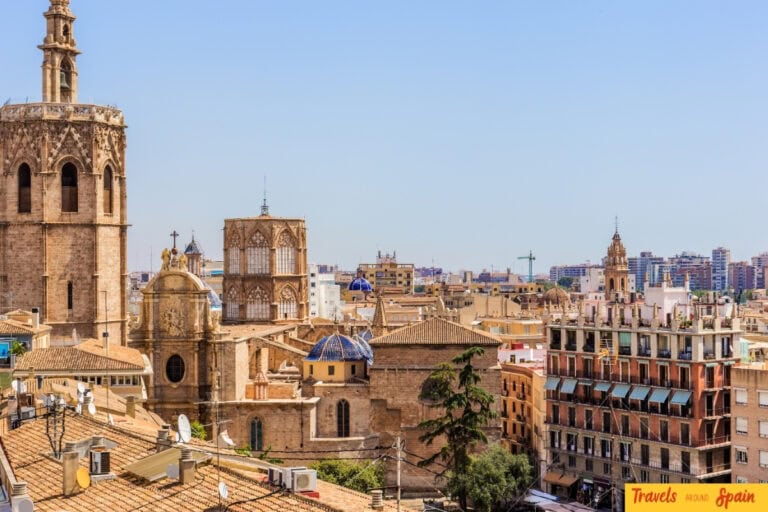
Hidden Gems in Valencia: 14 Local Favourites Beyond the Tourist Trail
Discover Valencia beyond the famous sights, from charming neighbourhoods and authentic food experiences to lesser-known attractions that many visitors overlook.
By Liam Mulligan | Published on August 31, 2025 | Last Updated on July 16, 2026
Travels Around Spain contains affiliate links. This means I may earn a commission if you make a purchase or booking through these links, at no extra cost to you. As an Amazon Associate I earn from qualifying purchases. I only recommend products and services I use and trust. Read my full Affiliate Disclosure for more information.
Think you’ve seen everything Valencia has to offer after visiting the City of Arts and Sciences, Valencia Cathedral and Mercado Central? Think again.
While those famous landmarks deserve their place on every itinerary, some of my favourite memories from Valencia have come from wandering beyond the main tourist attractions. Whether it was stumbling across a beautiful Modernist building, sipping traditional horchata in a centuries-old café or exploring colourful neighbourhoods filled with street art, I quickly realised that Valencia’s real charm often lies in the places many visitors overlook.
After several trips to Valencia, including returning with my family in 2022 and my partner in 2025, I’ve discovered that the city rewards anyone willing to slow down and explore a little further. It’s those quieter moments, finding a hidden courtyard, browsing a local market or chatting with café owners, that have made me fall in love with Valencia time and time again.
In this guide, I’ll share 14 of my favourite hidden gems in Valencia, from fascinating architecture and authentic local food to creative neighbourhoods and unique experiences that reveal a different side of one of Spain’s most captivating cities.
If it’s your first visit to the city, I’d recommend starting with my guide to the best things to do in Valencia before coming back to discover these lesser-known spots.
PLAN YOUR TRIP TO VALENCIA
My favourite resources for saving time and making the most of your visit.
Valencia Tourist Card – Unlimited public transport, free entry to selected museums, and discounts at many of Valencia’s top attractions.
City of Arts and Sciences Tickets – Skip the queues and secure your tickets before they sell out.
Valencia Essentials & World Heritage Sites Walking Tour – Discover Valencia’s UNESCO World Heritage Sites and historic centre with an expert local guide, perfect if it’s your first time in the city.
Why Explore Valencia’s Hidden Gems?
Valencia’s biggest attractions deserve the attention they receive, but some of the city’s most memorable experiences are found away from the busiest squares and longest queues. From beautifully preserved Modernist buildings and peaceful gardens to vibrant local neighbourhoods and traditional cafés, these hidden gems reveal a side of Valencia that many visitors never take the time to discover.
Some are just a few streets away from the city’s most famous landmarks, while others require a little more effort to find. Every one of them has helped me see a different side of Valencia over my visits, and I’d happily return to each of them again.
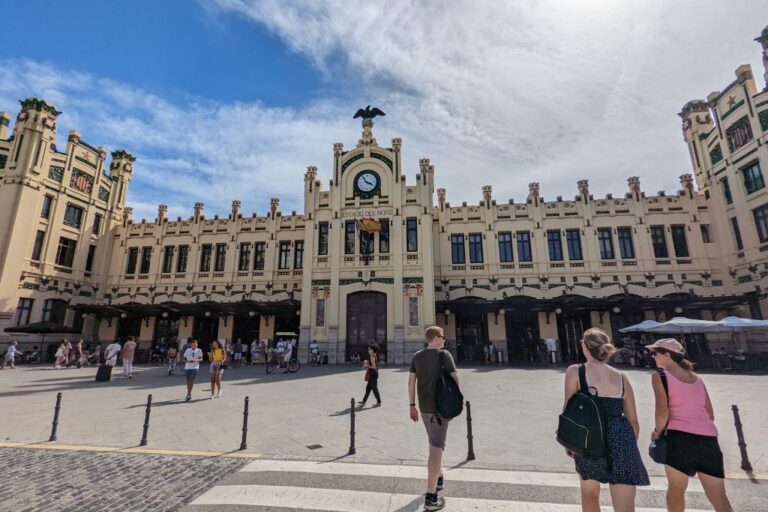
1. Admire the Beauty of North Station (Estación del Norte)
Most people arriving in Valencia are so focused on reaching their hotel or the Old Town that they barely notice one of the city’s most beautiful buildings. Estación del Norte (North Station) is far more than a transport hub, it’s one of the finest examples of Valencian Modernisme architecture and one of the city’s most overlooked landmarks.
Opened in 1917, the station is a masterpiece of Art Nouveau design, with colourful ceramic tiles, intricate mosaics, stained-glass windows and ornate wooden details celebrating Valencia’s agricultural heritage. Look closely and you’ll spot oranges, orange blossom and other regional symbols woven into the decorative artwork throughout the building.
Even if you’re not travelling by train, it’s worth stepping inside for a few minutes to admire the impressive ticket hall and beautifully preserved interior. Located next to the city’s bullring and just a short walk from the Old Town, it’s an easy stop to include while exploring central Valencia.
It wasn’t until one of my later visits that I took the time to properly appreciate the station. Like many visitors, I’d walked through it without a second thought before finally stopping to admire the incredible craftsmanship. Now it’s one of my favourite examples of Valencia’s architectural heritage.

Pro-Tip – Don’t just admire the exterior. Step inside and look up, many of the station’s most beautiful details are above eye level and are easily missed if you’re in a hurry.
2. Take a Free Tour of Valencia Town Hall
Standing proudly in Plaza del Ayuntamiento, Valencia Town Hall (Ajuntament de València) is one of the city’s most impressive buildings, yet surprisingly few visitors ever step inside. While most people admire its elegant façade before continuing to the Old Town or Mercado Central, the building itself is one of Valencia’s most underrated attractions.
Completed in the early 20th century, the Town Hall combines Neo-Baroque and Renaissance Revival architecture, with ornate balconies, grand staircases and beautifully decorated reception rooms. One of the highlights is the magnificent Crystal Hall (Salón de Cristal), an opulent room used for official ceremonies that feels more like the ballroom of a palace than a government building.
One of the best things about visiting is that entry is free, and when available, you can even join a guided tour to learn more about the building’s history and its role in Valencia’s civic life. It’s a wonderful way to experience one of the city’s grandest interiors without the crowds you’ll often find at more famous attractions.
Because it’s located in the heart of the city, it’s an easy stop while exploring the historic centre. You can easily combine it with Mercado Central, La Lonja de la Seda and Plaza de la Virgen, making it one of Valencia’s easiest hidden gems to add to your itinerary.

Pro-Tip – If the building is open, don’t hesitate to step inside. Most visitors simply admire the exterior before walking on, but the elegant interiors are what make this hidden gem so special.
3. Try Traditional Horchata at Horchatería Santa Catalina
No visit to Valencia is complete without trying horchata, the city’s famous chilled drink made from chufa (tigernuts) grown in the nearby orchards of Alboraya. While paella may be Valencia’s best-known culinary export, horchata is every bit as much a part of the city’s identity and one of the most authentic local experiences you can have.
One of the best places to try it is Horchatería Santa Catalina, a beautiful traditional café tucked away just a few steps from Plaza de la Reina. Dating back to the 19th century, it’s famous for its ornate ceramic tiles, elegant interior and long history of serving locals and visitors alike.
I’ll admit I wasn’t entirely sure what to expect the first time I tried horchata, but it quickly won me over. Served ice cold, it’s wonderfully refreshing, especially after a morning exploring Valencia’s historic streets. For the full experience, order it with a couple of fartons, the soft, glazed pastries traditionally dipped into the drink.
Although you’ll find horchata served across the city, enjoying a glass in one of Valencia’s historic horchaterías feels like stepping into a local tradition that has been passed down through generations.
If you’re a foodie like me, I’ve also shared more of my favourite places to eat in my guide to the best restaurants in Valencia.

Pro-Tip – Don’t be put off if you’ve never tried horchata before. Its slightly nutty, naturally sweet flavour is unlike anything else, and pairing it with fresh fartons is the traditional Valencian way to enjoy it.
4. Explore Colón Market
While Mercado Central is Valencia’s most famous food market, Colón Market (Mercado de Colón) offers a completely different experience. Housed inside one of the city’s most beautiful Modernist buildings, it’s less about doing your weekly shopping and more about slowing down, enjoying great food and soaking up the atmosphere.
Built in 1916, the market is a masterpiece of Valencian Modernisme, with elegant brickwork, colourful ceramic details and impressive iron arches that make it one of the city’s most striking architectural landmarks. Even if you don’t stop to eat or drink, the building alone is worth the visit.
Today, the market has been transformed into a stylish food hall filled with artisan cafés, wine bars, bakeries and restaurants. It’s the perfect place to enjoy breakfast, sample local produce, or simply take a break with a coffee while watching everyday life unfold around you. Unlike the bustle of Mercado Central, Colón Market has a much more relaxed and contemporary feel.
I always enjoy spending an hour here, even if it’s just to escape the midday heat with a drink before carrying on exploring the city. It feels much more local than touristy, and it’s easy to see why it’s become a favourite meeting place for Valencians.
Pro-Tip – Visit in the late morning or early evening when the cafés are buzzing with locals. It’s a wonderful place to pause for a coffee, a glass of wine or a few tapas before continuing your day.
5. Learn How to Cook Authentic Paella – Hands-On Cooking Class
For a truly authentic Valencia cultural experience that goes far deeper than simply eating paella, why not learn to cook traditional paella in Valencia Spain – the city where it originated?
This ranks among Valencia’s most popular cultural activities and best hidden experiences for food lovers, providing brilliant insight into local traditions that most tourists never discover. Originally a farmer’s lunchtime dish, paella has evolved to become Spain’s most famous export, but the best versions are still made using traditional Valencian cooking techniques.
The most authentic varieties are seafood paella (using prawns, mussels, and local fish popular along the coast) and traditional Valencian paella containing chicken, rabbit, and green beans – the original recipe that locals still prefer and tourists rarely try. This represents one of Valencia’s most authentic food experiences.
Valencia’s cooking schools offer comprehensive paella cooking classes that include market visits, hands-on cooking instruction, and eating your creation with local wine. You’ll learn proper techniques like achieving the perfect socarrat (crispy bottom layer) and when to add each ingredient – skills that will impress friends back home whilst giving you authentic Spanish cultural knowledge and Valencia’s best culinary education.

Pro-Tip – Choose a class that includes a market visit if possible. Seeing where locals shop for fresh ingredients adds another layer to the experience and helps you understand why authentic Valencian paella tastes so special.
6. Explore El Cabanyal, Valencia’s Historic Fishing District
While many visitors head straight for Malvarrosa Beach, far fewer take the time to explore El Cabanyal, Valencia’s historic fishing district. Just a short walk from the seafront, this colourful neighbourhood offers a fascinating glimpse into the city’s maritime heritage and has become one of my favourite places to wander.
Originally a separate fishing village, El Cabanyal is known for its distinctive narrow streets and beautifully decorated houses, many featuring colourful ceramic tiles and ornate façades. As you stroll through the neighbourhood, you’ll discover independent cafés, traditional taverns, boutique shops and vibrant street art, all contributing to its unique character.
One of the things I enjoyed most about El Cabanyal was simply wandering without a plan. Around almost every corner you’ll find another colourful building, an inviting café or a piece of street art that makes you stop for a closer look. Despite its growing popularity, it still feels refreshingly local compared to some of Valencia’s better-known attractions.
It’s also the perfect place to combine sightseeing with lunch. After exploring the neighbourhood, you can stroll down to the beach for a walk along the promenade or settle into one of the excellent seafood restaurants that line the nearby coast.

Pro-Tip – Allow yourself time to get lost. El Cabanyal is at its best when you wander its colourful streets without a strict itinerary, discovering hidden corners and local cafés as you go.
7. Discover the Street Art of El Carmen
Tucked away within Valencia’s historic centre, El Carmen is one of the city’s most fascinating neighbourhoods. While many visitors pass through on their way to Valencia Cathedral or the Serranos Towers, few take the time to explore the side streets where colourful murals and striking urban artwork have transformed centuries-old buildings into an open-air gallery.
What makes El Carmen so unique is the contrast between old and new. Medieval streets and historic stone walls sit alongside bold contemporary artwork, with murals covering everything from abandoned buildings to tucked-away alleyways. The artwork changes regularly, so every visit offers something different, making it one of the most exciting places in Valencia to explore on foot.
I love wandering around El Carmen without a map. Every corner seems to reveal another piece of artwork, a hidden square or a small independent café that’s easy to miss if you’re rushing between the city’s main attractions. It’s one of those neighbourhoods where slowing down really pays off.
Many of the most impressive murals can be found around Carrer dels Cavallers, Carrer de Dalt and Carrer de Quart, but part of the fun is simply seeing what you stumble across along the way.

Pro-Tip – Put your phone away for a while and wander without following Google Maps. Some of my favourite discoveries in El Carmen have come from taking the wrong turn down a quiet side street.
8. Escape the Crowds at Jardín de Monforte
While thousands of visitors stroll through Turia Gardens every day, far fewer make the short walk to Jardín de Monforte, one of Valencia’s most peaceful and elegant green spaces. Hidden behind high walls near the northern end of the Turia Gardens, this beautifully landscaped garden feels like a secret oasis in the middle of the city.
Created in the 19th century, the gardens combine formal French design with classical sculptures, ornamental fountains, perfectly trimmed hedges and colourful flowerbeds. Every path seems to lead to another quiet corner, making it one of the most relaxing places to escape the bustle of Valencia’s busy streets.
Unlike the expansive Turia Gardens, Jardín de Monforte has a much more intimate atmosphere. It’s the sort of place where you can sit on a bench with a coffee, enjoy a leisurely stroll or simply take a break from sightseeing surrounded by birdsong and beautifully maintained gardens.
It’s also one of Valencia’s best spots for photography. The elegant pergolas, marble statues and symmetrical pathways provide beautiful backdrops throughout the year, yet it’s surprisingly rare to find large crowds here.
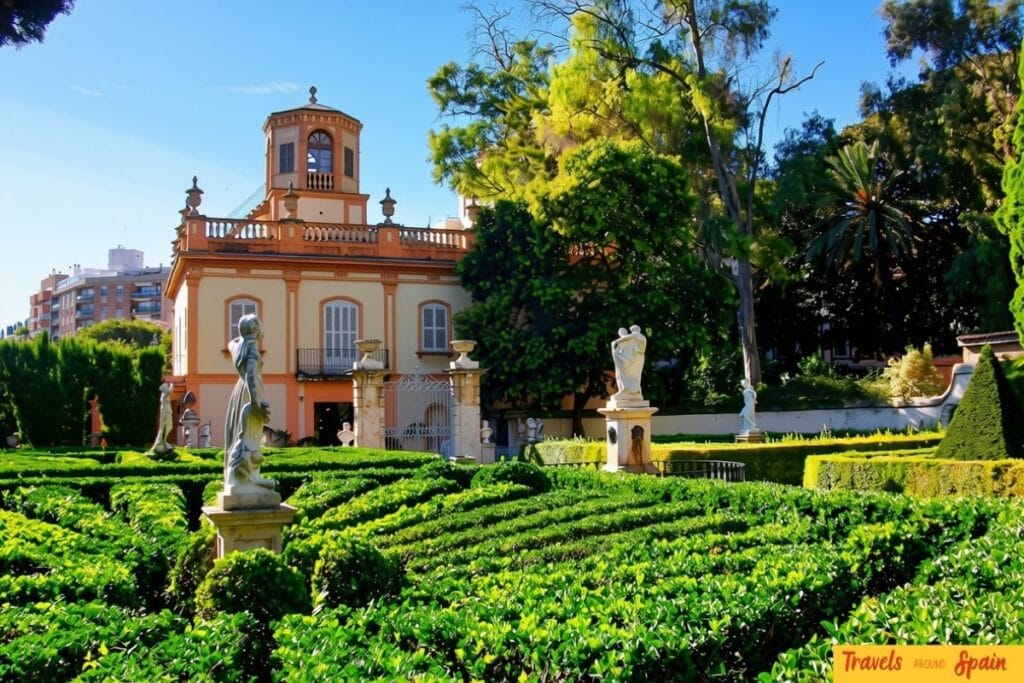
Pro-Tip – Visit early in the morning or later in the afternoon for the quietest experience. It’s the perfect place to recharge before continuing your exploration of Valencia.
9. Discover Valencia’s Creative Side at Centre del Carme
Tucked away in the heart of El Carmen, the Centre del Carme Cultura Contemporània (CCCC) is one of Valencia’s most underrated cultural attractions. Housed inside a beautifully restored 13th-century former monastery, it combines centuries of history with thought-provoking contemporary art, making it one of the city’s most fascinating hidden gems.
Unlike a traditional museum, the CCCC hosts a constantly changing programme of exhibitions, installations, photography, sculpture and cultural events. One visit might feature cutting-edge digital art, while the next showcases local Valencian artists or international exhibitions. Better still, entry is completely free, making it an easy addition to any Valencia itinerary.
What makes the CCCC so special is the setting itself. As you wander through the peaceful cloisters and historic courtyards, you’ll find modern artwork displayed against ancient stone walls, creating a striking contrast between Valencia’s past and present. Even if contemporary art isn’t usually your thing, the building alone is worth visiting.
I love places like this because they’re a reminder that some of the best travel experiences aren’t always the ones at the top of every guidebook. It’s somewhere you can slow down, escape the crowds for an hour and discover a completely different side of Valencia.
Pro-Tip – Check what’s on before you visit, as the exhibitions change throughout the year. Even if a particular exhibition doesn’t appeal, the historic cloisters and courtyards are reason enough to step inside.
10. Go to a football match at the Mestalla
You don’t have to be a football fan to appreciate the atmosphere at Mestalla Stadium, the historic home of Valencia CF. Opened in 1923, it’s one of Spain’s oldest and most iconic football grounds, and experiencing a match here offers a fascinating insight into the city’s passion for the beautiful game.
We were lucky enough to watch Valencia take on Real Betis during our visit in November 2025, and it quickly became one of the highlights of the trip. From the moment we arrived, the streets around the stadium were buzzing with supporters in black and white shirts, cafés were packed with fans discussing the match, and the excitement was infectious.
Inside, the atmosphere was incredible. The steep stands create an intense environment where every tackle, save and goal is met with a deafening roar from the crowd. Even if you don’t follow Spanish football, it’s a brilliant way to experience local culture and see just how much the club means to the city.
If there isn’t a match during your visit, you can still take a guided tour of Mestalla, which includes the dressing rooms, trophy room, pitchside and other behind-the-scenes areas that are normally off limits on matchdays.

Pro-Tip – If your visit coincides with a home match, don’t hesitate to buy a ticket, even if you’re not a huge football fan. It’s one of the best ways to experience Valencia’s local culture and creates memories that go far beyond traditional sightseeing.
11. Find Valencia’s Tiny House of Cats
One of Valencia’s most charming hidden gems is also one of its smallest. Tucked away in the El Carmen neighbourhood, the House of Cats (Casa de los Gatos) is a miniature house built into the base of a wall, complete with a tiny front door, balcony, fountain and even a little garden for its feline residents.
Created in 2003 by sculptor Alfonso Yuste Navarro, the tiny house was designed as a tribute to the neighbourhood’s many stray cats, which have long been cared for by local residents. It’s a wonderfully whimsical attraction that many visitors walk straight past without ever noticing.
Part of the fun is finding it. Hidden along Carrer del Museu, the miniature house is easy to miss if you’re not looking carefully, making it one of those discoveries that feels especially rewarding when you stumble across it.
It won’t take long to visit, but it’s a lovely little detour while exploring El Carmen and a reminder that some of the best travel memories come from the unexpected rather than the famous landmarks.
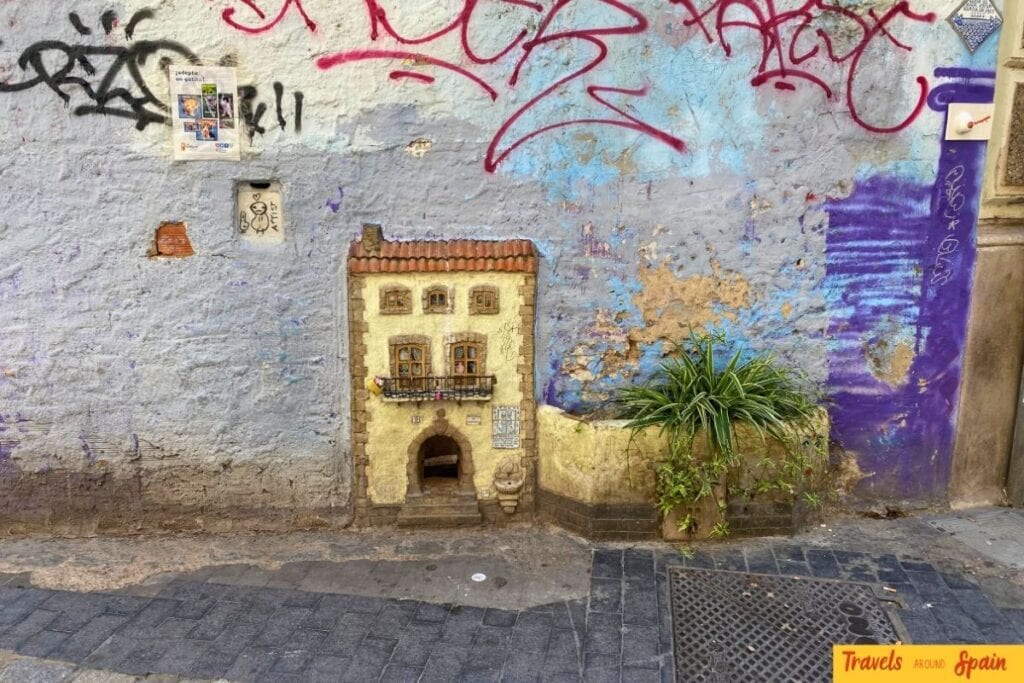
Pro-Tip – Keep your eyes peeled as you walk along Carrer del Museu. The House of Cats is built into the wall at street level, so it’s surprisingly easy to walk straight past it.
12. Experience Las Fallas All Year Round at the Fallas Museum
If you’re not visiting Valencia in March, don’t worry, you can still discover the history, artistry and traditions behind the city’s most famous festival at the Fallas Museum (Museu Faller de València).
Located close to the City of Arts and Sciences, the museum is home to the ninots indultats, the figures that have been saved from the flames each year by public vote. While hundreds of elaborate sculptures are burned during La Cremà on the final night of Las Fallas, one is spared every year and preserved in the museum, creating a fascinating collection that stretches back to 1934.
Walking through the galleries offers a unique insight into how the festival has evolved over the decades. You’ll see everything from humorous political satire to beautifully crafted works of art, while learning about the incredible skill and craftsmanship involved in creating these enormous sculptures.
Even though I haven’t experienced Las Fallas itself yet, visiting the museum gave me a much greater appreciation for why the festival is so important to Valencians. It’s the perfect place to understand the traditions behind one of Spain’s most spectacular celebrations, whatever time of year you visit.
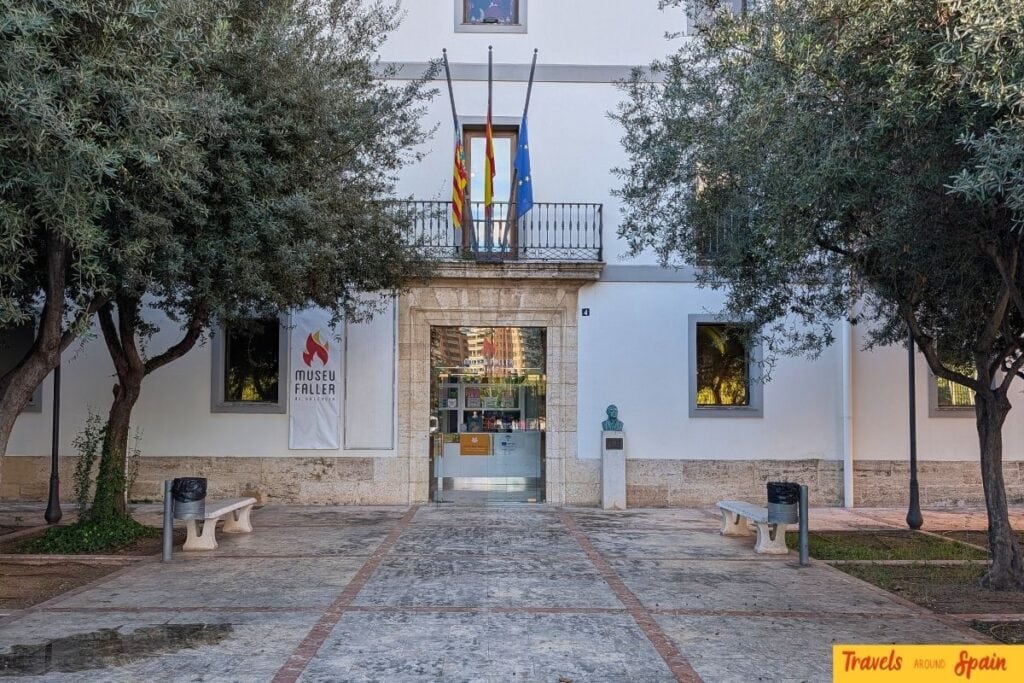
Pro-Tip – Allow around an hour to explore the museum, then combine your visit with the nearby City of Arts and Sciences. The two attractions are only a short walk apart and make an excellent pairing.
13. Relax in the Thermal Springs of Montanejos
If you’ve got an extra day to spare, one of the best hidden gems near Valencia is the mountain village of Montanejos. Around a 90-minute drive from the city, it’s famous for its crystal-clear thermal waters, dramatic limestone cliffs and peaceful natural surroundings, making it a refreshing escape from Valencia’s busy streets.
The highlight is Fuente de los Baños, a natural thermal pool where the water stays at around 25°C all year round. Whether you’re visiting in summer or winter, it’s the perfect place for a swim, surrounded by stunning scenery that feels a world away from the Mediterranean coastline.
Beyond the springs, Montanejos is a fantastic destination for walking and hiking. Several scenic trails wind through the surrounding mountains, offering spectacular viewpoints, quiet forests and opportunities to discover another side of the Valencia region.
I love that a trip to Montanejos shows just how diverse this part of Spain is. One day you’re wandering Valencia’s historic streets and relaxing on the beach, the next you’re swimming in a mountain river surrounded by nature.

Pro-Tip – Visit during spring or autumn if you can. The weather is ideal for hiking, and you’ll usually find the thermal pools much quieter than during the height of summer.
14. Visit Port Saplaya, Valencia’s Little Venice
Just a short drive or bus ride north of Valencia, Port Saplaya is one of the region’s most picturesque hidden gems. Often nicknamed “Little Venice”, this peaceful marina is lined with pastel-coloured buildings, charming canals and waterfront cafés, creating a scene that feels very different from the bustling city centre.
Originally built as a residential marina, Port Saplaya has remained relatively unknown compared to Valencia’s main attractions. That makes it the perfect place to escape the crowds for a few hours, whether you’re enjoying a leisurely walk along the waterfront, relaxing with a coffee overlooking the boats or unwinding on the nearby beach.
One of the things I love most about Port Saplaya is its relaxed atmosphere. Unlike some of Spain’s more famous coastal resorts, it still feels like a place where locals come to enjoy the sea rather than a destination built around tourism. It’s easy to spend a few hours wandering the canals before settling down for lunch at one of the marina restaurants.
If you’re looking for somewhere a little different during your stay in Valencia, Port Saplaya is well worth the short journey. It’s proof that some of the region’s most rewarding places are found just beyond the city limits.
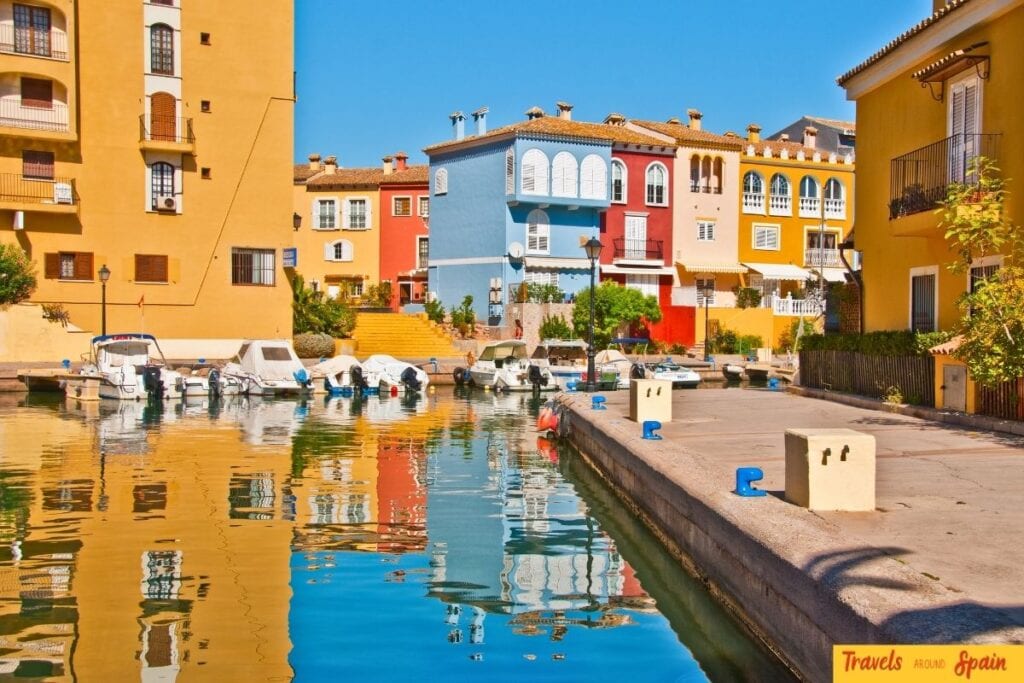
Pro-Tip – Visit around sunset when the colourful buildings are reflected in the calm waters of the marina. It’s also one of the best times to enjoy dinner overlooking the harbour.
How to Find Valencia’s Hidden Gems
One of the things I love most about Valencia is how easy it is to explore. Many of these hidden gems are tucked away just a few streets from the city’s biggest attractions, meaning you don’t have to venture far to discover a completely different side of the city.
The best way to uncover them is simply by slowing down. Rather than following Google Maps from one attraction to the next, allow yourself time to wander through neighbourhoods such as El Carmen, Ruzafa and El Cabanyal, browse independent shops, stop for a coffee and see where the streets take you. Some of my favourite discoveries in Valencia have come from taking an unexpected turn rather than sticking to a strict itinerary.
A handful of these hidden gems are a little further afield. Port Saplaya is easy to reach by public transport, while hiring a car gives you the flexibility to visit places like Montanejos and explore more of the surrounding region.
If you have the time, I’d recommend spending at least three days in Valencia. It gives you the chance to experience the city’s headline attractions while leaving room to uncover some of these quieter corners. If you’re planning your trip, my 3-day Valencia itinerary shows you exactly how I’d combine both.
Frequently Asked Questions
What are the best hidden gems in Valencia?
Some of my favourite hidden gems in Valencia include North Station, Jardín de Monforte, El Cabanyal, Centre del Carme, Port Saplaya and the House of Cats. They offer a quieter, more authentic side of the city away from the busiest tourist attractions.
Is Valencia worth visiting beyond the main attractions?
Absolutely. While landmarks like the City of Arts and Sciences and Valencia Cathedral are well worth visiting, some of Valencia’s biggest surprises are found in its local neighbourhoods, traditional cafés, peaceful gardens and lesser-known cultural attractions. Exploring beyond the highlights is one of the reasons I keep returning to the city.
What is the most underrated neighbourhood in Valencia?
For me, El Cabanyal is Valencia’s most underrated neighbourhood. Its colourful houses, maritime history, independent cafés and relaxed atmosphere make it a wonderful place to explore at your own pace. If you’re looking for a more creative atmosphere, El Carmen is another excellent choice thanks to its incredible street art and historic streets.
Where can I try authentic horchata in Valencia?
One of the best places to try traditional horchata is Horchatería Santa Catalina, a historic café in the heart of the Old Town. Pair it with a couple of freshly baked fartons for the classic Valencian experience.
Are Valencia’s hidden gems free to visit?
Many of them are. You can admire the architecture of North Station, explore Jardín de Monforte, wander through El Cabanyal and discover the street art in El Carmen without spending a euro. Some attractions, such as the Fallas Museum or a Mestalla Stadium tour, do charge an admission fee.
What is the best day trip from Valencia?
If you’re looking to escape the city for a day, Montanejos is one of the best options. Its crystal-clear thermal springs and scenic mountain setting provide a completely different experience from Valencia’s beaches and historic centre. If you prefer somewhere closer, Port Saplaya is an excellent half-day trip with its colourful marina and relaxed atmosphere.
Final Thoughts: Discover a Different Side of Valencia
Valencia’s famous landmarks are more than worthy of their reputation, but some of my favourite moments in the city have come from exploring beyond the obvious. Whether it was admiring the intricate details of North Station, enjoying a glass of traditional horchata, wandering the colourful streets of El Cabanyal or finding a peaceful corner in Jardín de Monforte, these experiences revealed a side of Valencia that many visitors never get to see.
Having now visited Valencia several times, I still find myself discovering something new on every trip. That’s one of the things I love most about the city. It rewards curiosity, whether you’re stepping into a hidden courtyard, stumbling across a contemporary art exhibition or simply taking the time to explore a neighbourhood without a plan.
If you’ve already ticked off Valencia’s headline attractions, or simply want to experience the city from a different perspective, I hope these hidden gems inspire you to venture a little further. You might just discover that your favourite memory isn’t one of the famous sights, but one of the places you almost walked straight past.